

Moneyline
Pick the winner. There is no draw column to worry about, because a tied scoreline simply goes to extra periods and the market settles on whoever is ahead once those finish.

EuroLeague nights, NBA mornings
A EuroLeague tip-off reaches Kottayam at half past eleven at night. The NBA turns up with the first chaya of the morning. This page follows both from a first-floor flat off Baker Junction, and explains what the FairPlay board is really measuring when it puts a number on a game — because it is not how good the two teams are.
Tonight & tomorrow
Games already running and the ones tipping next, each quoted from both directions. Every clock below is Indian Standard Time.
Prices shown are illustrative
Min 100 · Max 50,000
Min 100 · Max 50,000
Real Madrid v PanathinaikosLive
Min 100 · Max 25,000
Min 100 · Max 50,000
FIBA Qualifiers — India v Kazakhstan
Min 100 · Max 20,000
Where the number comes from
An over-under figure is a short sum: how many trips down the floor the game will hold, times how many points a side wrings out of a hundred of them, doubled.
| Pace (possessions) | Rating 110 | Rating 115 | Rating 120 |
|---|---|---|---|
| 94 (slow) | 206.8 | 216.2 | 225.6 |
| 98 | 215.6 | 225.4 | 235.2 |
| 100 (average) | 220.0 | 230.0 | 240.0 |
| 102 | 224.4 | 234.6 | 244.8 |
| 106 (fast) | 233.2 | 243.8 | 254.4 |
Tempo is the heavier lever. Track the 115 column from top to bottom: a crawling game and a sprinting one finish 27.6 points apart, and nothing about the shooting has changed. Now track the 100 row from left to right: a full ten points of efficiency shifts the figure by 20. The two look close enough to call it a tie, until you count how often each actually occurs. A twelve-possession difference in tempo between two teams is ordinary. A ten-point difference in efficiency is not. That imbalance is the whole reason a pair of excellent sides can drift under a modest line while two indifferent ones sail over a generous one.

Markets
A single NBA fixture carries more than sixty separate lines, from the straight winner down to one player's rebound count.
Pick the winner. There is no draw column to worry about, because a tied scoreline simply goes to extra periods and the market settles on whoever is ahead once those finish.
One side starts the game carrying a deficit. Winning margins in this sport fan out across a broad range instead of bunching on one or two figures, so shifting the handicap by a point nudges the price rather than jumping it.
One number covering everything both sides score between them. The figure you are betting against comes out of expected tempo and scoring efficiency, which is a different question from which side is stronger.
Each quarter and each half carries its own line. Opening quarters and closing quarters are played in very different ways, and the prices reflect that rather than dividing the full-game number into equal slices.
Individual lines on points, boards, assists and the combined versions of those. Every one of them rests on court time, so a lopsided scoreline is the thing most likely to sink an otherwise sound read.
Everything reprices while the ball is live. With a score changing every few seconds the over-under number is the one that shifts hardest, sometimes several times inside a single timeout.
Competitions
Four competitions that play at four genuinely different speeds, which is why their totals lines never resemble one another.
October through June, and the reason most Indian basketball followers are awake early. Tips fall inside the Indian breakfast window, so you watch it in daylight rather than in the small hours.
The strongest club competition in Europe, and a heavier, more deliberate game than the American one. That shows up straight away in totals lines that sit noticeably below NBA numbers.
American university basketball, played over a shorter game with a colossal gap between the best programmes and the weakest. Handicaps get enormous, and so does the variance.
The Australian league plus qualifying windows for the World Cup and the Olympics, including India's own fixtures. These fill the weeks when the NBA calendar goes quiet.
Getting started
New to an exchange? These four screens are the entire journey, from a blank account to a bet sitting open on a game.
It rained that evening the way it rains here in July. Not a shower — a grey wall of water rolling in off the rubber country towards Pala, drumming on the roof tiles hard enough that we turned the volume down and gave up on hearing the commentary. Four of us were squeezed into a first-floor flat a few minutes from Baker Junction. Real Madrid were playing Panathinaikos in the EuroLeague, listed on the board for 11:30 at night our time, and we were watching on a laptop because the cable box had drowned somewhere around eight o'clock. Somebody had the prices open on a phone beside him. Madrid were 1.52 to back, Panathinaikos 2.55. Nobody in that room held a strong view about either club, which turned out to be exactly what made the evening instructive.
Bijoy said the total looked low. That was the entire case. Not who would win — just that these were two serious teams, serious teams put up points, and the number on the screen seemed shy. He takes the early train to Ernakulam most mornings and had no business still being awake, and by about one o'clock he had a very clear demonstration of why that particular instinct empties wallets.
Backing an over is not a vote on quality. It is a wager on arithmetic that has mostly already been decided before the ball goes up. The market hands you a figure, you say the combined score will finish above it or below it, and the buzzer settles the question. Extra periods are included. That is the whole mechanic, and it sounds so simple that people skip straight past the part that matters, which is where the figure came from.
Work through it with the game we had on. Both clubs shoot well — set their efficiency at 115 for the sake of the example. If they play a patient, walk-it-up game and the tempo comes in around 94 possessions, the grid above gives you 216.2. If the same two clubs hare up and down at 106, the same grid gives you 243.8. Identical shooting, identical rosters, and the sum moves 27.6 points on tempo alone. Bijoy was reading the roster. The market was reading the tempo. Only one of those two things was on the table.
The other half of the mechanic is that possessions are held in common. If Madrid decide to grind out the shot clock, they are not only reducing their own opportunities — Panathinaikos get the ball back later too, so their count falls by the same amount. Tempo does not average out across a matchup, it compounds. Put a running team against a plodding one and the game generally settles nearer the running team's habits than halfway between the two. That evening it settled nearer the plodding end, in a half-court wrestling match with the rain still going outside, and the fourth quarter arrived with the number still a long way off.
Extra time. Five minutes bolted onto a forty-eight-minute game carries about a tenth of the regulation scoring rate with it, which works out near enough to 24 points on a game running towards 230. Look at what that means against the margins these bets are usually decided by. Under a 230 line, a game that finishes on 219 is a comfortable win and one that finishes on 226 is a nervous one. Neither of those cushions survives a single overtime period.
So a tied scoreline with the clock running down is not a modest additional risk on an under. It is the risk. Everything else you got right about pace and matchups is suddenly irrelevant, and your position turns on a coin flip in the last ten seconds of regulation. The reverse is equally true — an over that had no business winning gets a full reprieve. If you would rather not hand a night's reasoning to one possession, the option to trade out before the buzzer is set out on in-play betting.
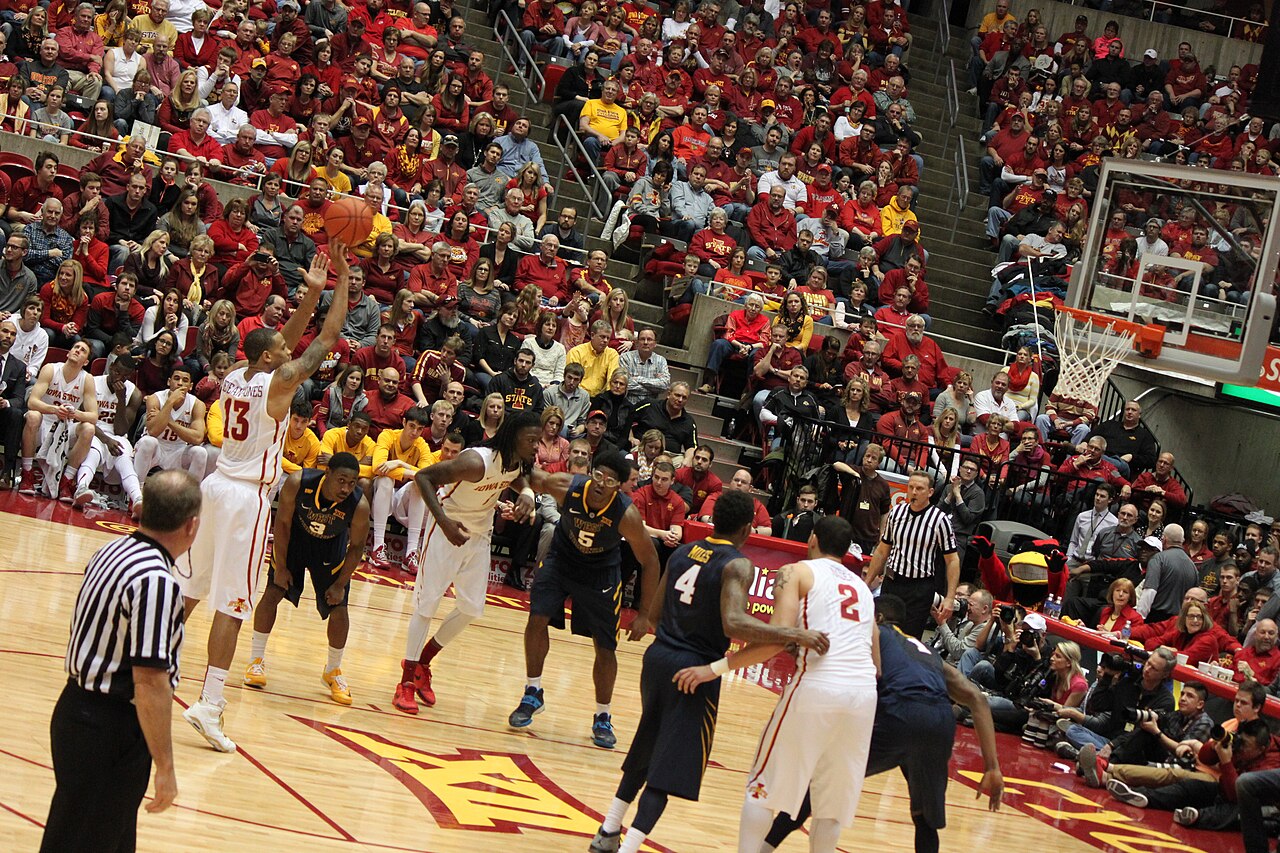
Anyone who has played on the concrete courts around town knows the routine: your side is down, so you start hacking. Professional basketball does the same thing with better free-throw shooters. The trailing team fouls deliberately to freeze the clock and win the ball back, the leaders go to the line, and possessions appear in a stretch of the game that would otherwise have quietly wound itself down.
For anyone holding a handicap or a totals position this is the part to stay awake for, and it is the part most people miss because the result has already stopped being interesting. A side fourteen clear with ninety seconds left can finish nine clear or twenty clear, and which of those you get depends entirely on whether the opposition bench decides it is worth fouling. The winner is settled. Your number is not. Walking away from the screen at that moment is a misreading of which market you are actually holding.
Here is the part that makes the NBA unusually easy to follow from Kerala. Tips land roughly between 4:30 and 9:00 in the morning IST, depending on which American time zone is hosting. Miami against the Knicks on the board above sits at 5:30, the Lakers at 6:00, Golden State against Denver at 8:30. That is not a vigil. That is a game running on the phone propped against the flask while the kettle goes, and another one still going when the auto turns onto the road for the station.
Set it against European football, which demands the small hours and leaves you useless for work, and the difference in sustainability is enormous. The morning slate here fits around the commute rather than fighting it. Plenty of people I know watch the first quarter over breakfast, check the score again at Kottayam station, and pick the fourth quarter up on the train.
One trap sits inside that convenience. The United States moves its clocks in November and again in March. India does not move its clock at all. So the IST tip-off slides by an hour twice a season while the fixture list looks completely unchanged, and everyone who was relying on memory turns up either an hour early or an hour late for a fortnight. Read the time printed on the board instead. Live sports shows what is running at any given hour, and responsible gaming covers deposit and session limits if the morning habit starts eating into the working day.
Back to that Madrid row for a moment, because the way it is displayed confuses newcomers. Two figures sat side by side: 1.52 and 1.55. The first is what you can take if you want Madrid to win. The second is what you would be laying — that is, taking the other side of somebody else's bet, and paying out if Madrid do win. Every market on the board shows the pair, and the small gap between them is where the exchange lives.
Say you fancied Madrid and put ₹1,000 on at 1.52. A win returns ₹1,520, so ₹520 of profit on top of your stake back. Panathinaikos at 2.55 would have turned the same ₹1,000 into ₹2,550. Nothing more complicated than that. The EuroLeague row also carried a ceiling of ₹25,000, against ₹50,000 on the NBA fixtures, which tells you something useful without a single word of explanation: more money is looking at American basketball than at European basketball, and thinner books produce wider gaps between those two numbers. Player props on a college game are thinner again.
Smaller stakes are entirely normal. Basketball markets open from ₹20, and there is no obligation to bet the row minimum on anything. Three of us that night had ₹100 on the game between us, which was quite enough to make a defensive slog at midnight feel like it mattered.
Nothing above requires an account to read, and nothing requires one to watch either. But if the prices are going to mean anything beyond decoration, the four steps further up this page are the whole procedure — sign up, add money, choose a market, place the bet. It is worth doing on a quiet afternoon rather than at 11:25 at night with a tip-off approaching, because rushing the setup is how people end up with a mistyped mobile number and no way back in.
The detail lives on three pages. FairPlay register walks through opening the account and verifying the number that will be attached to it. FairPlay login covers signing back in and what to do when the OTP does not arrive, which in this district is usually a coverage problem rather than an account problem. FairPlay India is the overview page for the platform as a whole. The product is a single product across the country: one login screen, one wallet, the same UPI rails, the same basketball board. There is no Kerala edition with different markets and no separate app for the south.
Money moves the same way for everyone too. Deposits run over UPI from whichever app you already use for the vegetable shop, and withdrawals go back to the account they came from. Keep the name on the bank account and the name on the betting account identical from the start and you will save yourself a support ticket later.
They will find you eventually. A WhatsApp forward, a Telegram invite, someone in a group of a thousand strangers announcing that he has inside information on tomorrow morning's NBA game and will share it for a few hundred rupees. During a big series they arrive in waves. The screenshots of past winners look convincing because a screenshot costs nothing to manufacture, and for every ten tipsters shouting different picks, one of them is right by accident and posts the proof.
Apply the obvious test. A person who truly knew the outcome of a basketball match would not be selling it to strangers in a group chat; he would be quietly betting it himself. That is the end of the argument. The second test is about where the money goes. Deposits belong in your own wallet through UPI, never into a stranger's personal handle, and no genuine service asks you to send cash to an individual and wait for a bet to be placed on your behalf.
A third habit is worth building. Reach the login screen the same way every time — the site you already know or the app from the official download page — rather than through a link somebody sent you. Lookalike pages exist for exactly one purpose, and they are convincing enough at 6 in the morning with a tip-off starting. If something on a page feels wrong, close it and go through customer support instead of typing a password into it.
The last row on the board is the one I keep an eye on: a FIBA qualifier, India against Kazakhstan, Sunday at 4:00 in the afternoon with a ₹20,000 cap and no prices posted yet. It is the only fixture on the whole list you can watch at a civilised hour without setting an alarm, and the only one where the neighbourhood actually has a stake in the result.
Kerala has never been short of basketball courts. Half the schools and colleges in and around Kottayam have one, most of them outdoors, most of them cracked, all of them unusable for three months a year when the rain arrives. Anybody who grew up shooting on wet concrete near Nagampadam or up the Kanjikuzhy side has a feel for this sport that no amount of watching acquires. Whether that feel translates into reading a totals line is a separate question. Tempo is a number, not an instinct, and the grid higher up this page will tell you more about a Sunday afternoon qualifier than twenty years of playing will.
That is really the lesson from the Panathinaikos night. Everyone in the room knew basketball. Nobody in the room had thought about possessions. The rain stopped somewhere near two, the game finished the way a grinding half-court game finishes, and Bijoy made his train with about four hours of sleep and a small, useful lesson about which question the market was asking.
FAQ
The questions that come up in the group chat: where the number comes from, what extra time does to it, and why the price moves after the game is won.
It is two figures multiplied. Take the possessions a team is expected to have, multiply by the points that team tends to produce per hundred possessions, and double the answer because there are two sides on the floor. Put a hundred possessions against a rating of 115 and the answer is 230. Neither input asks how good the teams are, which is why a pair of strong sides can sit under a modest line and two ordinary ones can fly past a generous one.
Tempo, nearly always. Freeze the rating at 115 and slide pace from 94 up to 106 and your expected total travels 27.6 points. Freeze pace at 100 and slide the rating from 110 to 120 and it travels 20. On paper those are similar sized levers. In practice they are not, because a twelve-possession gulf between two teams turns up constantly while a ten-point efficiency gulf hardly ever does. Read the tempo first and the shooting second.
They do, and they usually settle the bet by themselves. Five more minutes tacked onto a forty-eight-minute game brings roughly a tenth of the normal scoring rate with it, which is about 24 points on a game pacing towards 230. Hardly any totals position is decided by a cushion that big. So a tied scoreline at the buzzer is not a small extra risk on your under — it is the risk, and the same event is a rescue for almost any over that was heading for a loss.
Because of deliberate fouling. A side that is behind with a minute or two left will foul on purpose to halt the clock and get possession back, which parks the leaders on the free-throw line and manufactures trips down the floor that would never otherwise have happened. Ten or twelve points can land on the scoreboard after the result stopped being in doubt. A lead of fourteen with ninety seconds showing can finish as nine or as twenty, and your handicap or totals position lives inside that gap.
Somewhere between 4:30 and 9:00 in the morning IST, depending which American time zone is hosting. It is a breakfast sport here rather than an overnight one, which makes it far kinder to follow than European football. One catch worth remembering: the United States shifts its clocks in November and again in March while India leaves its own alone, so the IST tip-off moves by an hour twice a season even though the fixture list looks identical. Read the listed time rather than trusting last month's habit.
No, and the difference matters. Football margins pile up on one and two goals, so crossing from one handicap to the next is a cliff edge in the price. Basketball margins are strewn across a much wider band with no comparable pile-ups, so moving a spread a point up or down changes the odds by a smooth increment. That makes these lines easier to reason about, and it also removes the specific value that key numbers hand you in lower-scoring sports.
Almost certainly because the game stopped being competitive. Props are settled on totals accumulated over the minutes a player is actually on court, and a coach with a thirty-point lead sits his starters for most of the fourth quarter. A rebounds or points line that looked comfortable at half-time then runs out of runway. Backing a prop is really two bets stacked together: the player performing, and the scoreline staying close enough for him to keep getting minutes.
Markets open from ₹20, and each row on the board carries its own floor and ceiling — the NBA fixtures listed above show ₹100 minimum against a ₹50,000 maximum, the EuroLeague game ₹25,000, and the India qualifier ₹20,000. Money is deepest on NBA moneyline and totals. College games and individual player lines carry thinner books, which you will notice as a wider gap between the two prices and a smaller cap on what you can get on.
No. Anyone who genuinely knew the result of a game would have no reason to sell it to strangers for a few hundred rupees, and the screenshots of past winners in those groups cost nothing to fabricate. The other tell is where the money goes: a real deposit runs through your own wallet over UPI, never into somebody's personal handle. Fund your account yourself, place the bet yourself, and treat anyone offering certainty about a sport as the warning it is.
Explore FairPlay