Secure & encrypted platform · 18+ only · Play responsibly

FairPlay Casino: Live casino table with a dealer

A ₹50 table in Nizamabad

FairPlay Blackjack in India

It rained hard over Khaleelwadi one Wednesday in late September and then stopped all at once, the way it does here. I went up to the terrace, waited for the asbestos sheet to finish dripping, and played forty hands of FairPlay blackjack at ₹50 a box while the turmeric godown below pulled its shutters down. This page is that session, costed line by line — the dealer bust table that decides every move, the two buttons that are not decisions at all, and the one rule printed on the felt that mattered about four times more than anything I did with my cards.

Live tables
25+
Min bet
₹50
Edge played well
~0.5%
Insurance edge
6.80%

Wednesday, After The Rain

Forty hands, written down as they happened

Percentages float away from you until they are attached to actual rupees on an actual box. So here is one ordinary session on one ordinary table, with the ledger left in.

Kishore came up at about half past nine. He drives a share auto on the Nizamabad Junction to bus stand run and finishes early on a wet day, because nobody stands out at the stops once the water starts moving down Khaleelwadi's side lanes. The television was on in the corner with the sound off — a Telugu news bulletin looping the same footage of a flooded culvert near Bodhan road — and the whole room smelled of haldi from the godown downstairs, the way it always does in market season. He wanted to watch me play. I opened an RNG blackjack table at ₹50 and we sat with one phone between us.

Fourth hand of the night, I got the one everybody hates. Ten and a six against a dealer ten. That table had no surrender button, so I took a card, caught a seven and went to twenty-three before the dealer had done anything at all. Fifty rupees gone in four seconds. Kishore said I should have stood. I told him the dealer's ten only breaks about one time in five, so standing on sixteen is the same loss dressed up nicely, and he did not believe me until I showed him the table further down this page.

Twice that night the dealer turned up an ace and the insurance prompt slid across the screen. I refused both. The first time the hole card was a queen and Kishore made a noise like I had reversed into a wall. The second time it was a four, and he went quiet. One hand proves nothing in either direction, which is the part that is genuinely hard to sit with — the correct decision and the good outcome are two separate things, and blackjack keeps handing you evidence that they are the same.

Hand nineteen was a natural. Ace, king, and ₹75 came back on top of my ₹50 because that table paid 3 to 2. Hand twenty-three was a pair of eights against a dealer six — split, another ₹50 in, one hand made eighteen and the other twenty, and the dealer drew to twenty-three. Hand thirty-one was a hard eleven against a five, so I doubled: ₹100 on the box, one card, a ten, and the dealer broke again. For about ten minutes there I was comfortably ahead and felt clever about it.

I finished ₹250 down. Here is the honest arithmetic. Forty hands at ₹50 is ₹2,000, plus ₹50 for the split and ₹100 for the double, so ₹2,150 crossed the table in total. At half a percent — the price of playing this game properly — the theoretical cost of the whole evening was about ₹11. Eleven rupees. Less than the auto fare to the market yard. Everything else in that ₹250 was noise, and noise runs in both directions; on a different Wednesday the same forty hands hand you ₹400 and you go to bed convinced you have worked something out.

Now do the same sum on a table that pays 6 to 5 instead. My natural would have returned ₹60 rather than ₹75, and across the same ₹2,150 the rule adds roughly 1.42%, taking the evening's real cost from about ₹11 to about ₹41. Read that twice. The single choice I made before the first card was dealt — which table to sit at — was worth almost four times more than every hit, stand, split and double I made afterwards combined. That is the whole argument of this page, and the rest of it is just working out.
The One Column To Learn

How often the dealer breaks

This is the table I showed Kishore on the terrace. Every line of basic strategy falls out of it, because the dealer's face-up card is a forecast of their finish, and your move is a response to that forecast.

Dealer bust probability by upcard — dealer stands on all seventeens
Dealer showsDealer bustsRead
235.4%Weak
337.4%Weak
439.5%Weak
541.6%Weakest
642.3%Weakest
726.2%Strong
824.5%Strong
922.8%Strong
10 / J / Q / K21.2%Strong
Ace11.5%Strongest

Split it into two halves and stop there. With a 2 through a 6 showing, the dealer breaks somewhere between 35% and 42% of the time. They are already in difficulty, so you do not have to manufacture any. Standing on a horrible thirteen against a five is not cowardice and it is not you trying to make a hand — it is you declining to break first and letting the dealer do the work. From 7 up to the ace, the break rate collapses from 26% to 11.5%. Now sitting on a weak total is simply a slower way of losing, and you have to draw whether it feels right or not.

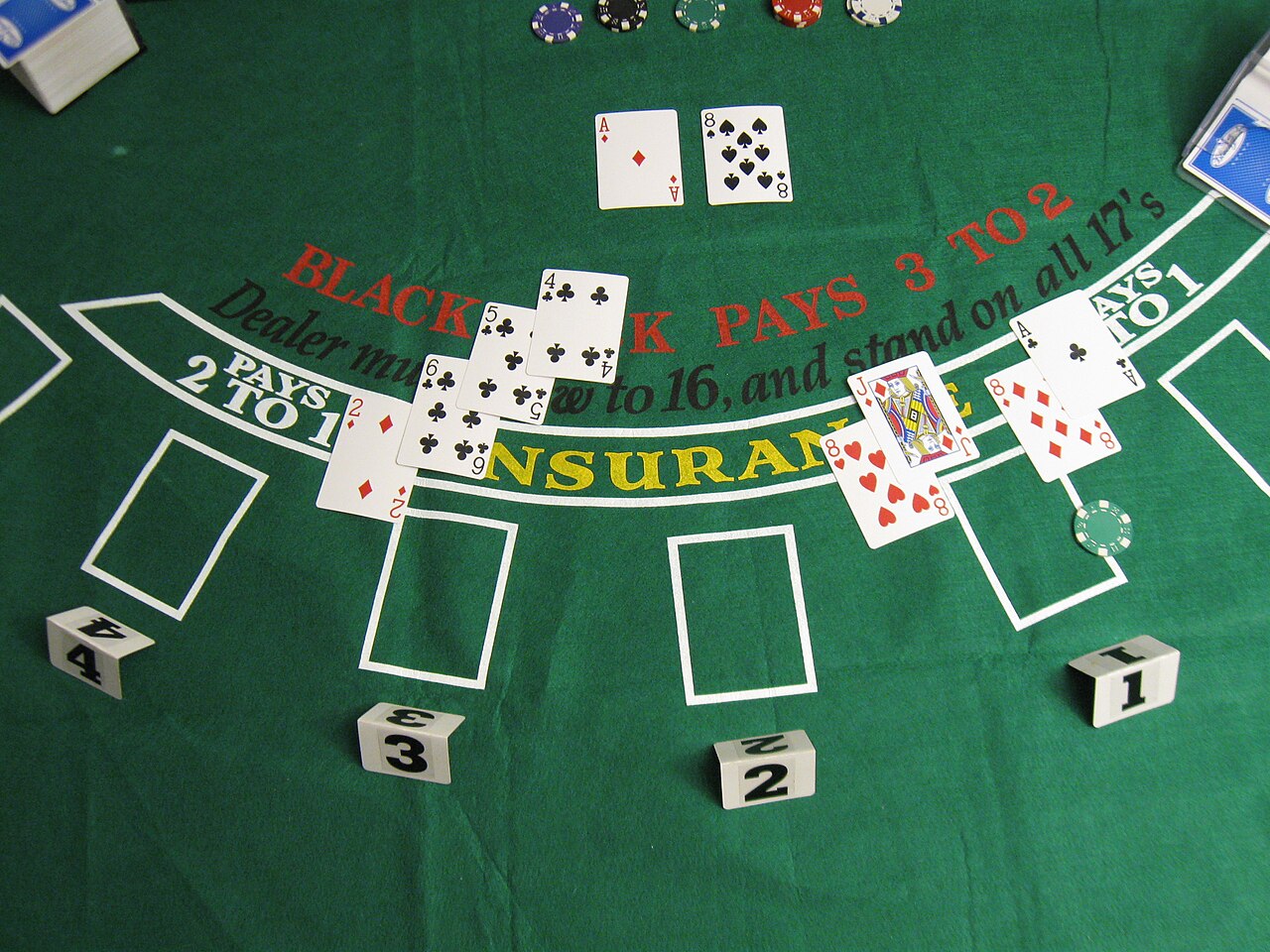
FairPlay Blackjack Card Deal: Dealer's upcard face up beside a player's two cards on a blackjack table
You see the dealer's upcard before you have to act on anything. Nothing else at the table gives you that much information for nothing.

Read The Felt First

What a 6:5 table costs you

A handful of tables pay 6 to 5 on a natural rather than 3 to 2. It reads like small print. It is the most expensive thing described anywhere on this page.

Payout on a natural blackjack — 3:2 table versus 6:5 table
Your bet3 : 2 pays6 : 5 paysYou lose
₹500₹750₹600₹150
₹1,000₹1,500₹1,200₹300
₹2,500₹3,750₹3,000₹750
₹5,000₹7,500₹6,000₹1,500

One line of small print, four times the price. A natural shows up around 4.75% of hands, and on every one of them a 6:5 table quietly keeps three-tenths of your stake that a 3:2 table would have handed over. Multiply the frequency by the shortfall and you get about 1.42% added to the house edge, which drags a well-played game from roughly half a percent up towards two. At that point blackjack has thrown away the advantage that made it worth learning, and nothing you do with the cards afterwards buys it back. The number is in the table info. Look before you take the seat, not after.

The Buttons

Four moves and two traps

Real choices are what set this game apart from everything else in the lobby. Two of the things the software offers you are not choices at all, and both of them are priced accordingly.

Basic

Hit and stand

Ask for one more card, or freeze where you are. Cross twenty-one and the hand is finished on the spot; the dealer never gets a chance to save you.

Value

Double down

You put a second stake up and accept exactly one card for it, no more. On a hard eleven facing a small dealer card, no other button on the felt earns as much.

Pairs

Split

A matched pair becomes two live hands, each carrying its own stake. Aces and eights get split every single time. Tens and fives never do.

Exit

Surrender

Hand back half the stake and walk out of the hand before it plays. The table has to offer it, and the spot is basically hard sixteen against a ten or an ace.

Trap

Insurance

A 2 to 1 side wager on the hole card being worth ten. It has to arrive a full third of the time to break even, and it arrives 31% of the time.

Trap

Even money

The same wager under a friendlier name, pushed at you while you are sitting on a natural. Accept and your 3:2 shrinks to 1:1 at that identical rotten price.

The table nobody in the room is sitting at

Kishore has played Andar Bahar since he was a boy and Teen Patti at every Diwali he can remember. Both games explain themselves in about a minute. Roulette explains itself faster than that. Blackjack asks for a bit of study before it gives anything back, so most people scroll past it, which is how the best-priced game in the building ends up being the quiet one.

Why this game is cheaper than the rest of the lobby

Every other table in here charges a flat fee. Andar Bahar takes 2.15% of what you stake regardless of which side you back, European roulette takes 2.70% of every chip on the layout, and your thinking has no effect on either figure. Blackjack is built differently: your choices are inside the maths rather than outside it. The game hands you part of the outcome, and if you handle that part properly the cost drops to somewhere near half a percent.

That is the deal on offer. Do a little homework, and in exchange you get the only game on the site where being competent changes the price. Skip the homework and you should honestly skip the game — Andar Bahar and baccarat will be kinder to an untrained player than blackjack ever will, because they ask you for nothing and charge a fixed rate for the privilege.

The most expensive button anyone will offer you

An ace lands face up and the software offers insurance at 2 to 1. For that to be a fair price, the card underneath would have to be worth ten at least a third of the time. Do the count on a six-deck shoe: 309 cards you cannot see, 96 of them tens, which is 31.07%.

The distance between 31.07% and the 33.33% you need is a house edge of 6.80%. Nothing else on this site is priced that badly — it is more than double the cost of a roulette spin and more than thirteen times the cost of a properly played blackjack hand. People take it because it appears at the precise moment they feel most exposed, and because it is sold with the vocabulary of safety. Turn it down every time, including the version the dealer calls even money when you are holding a natural.

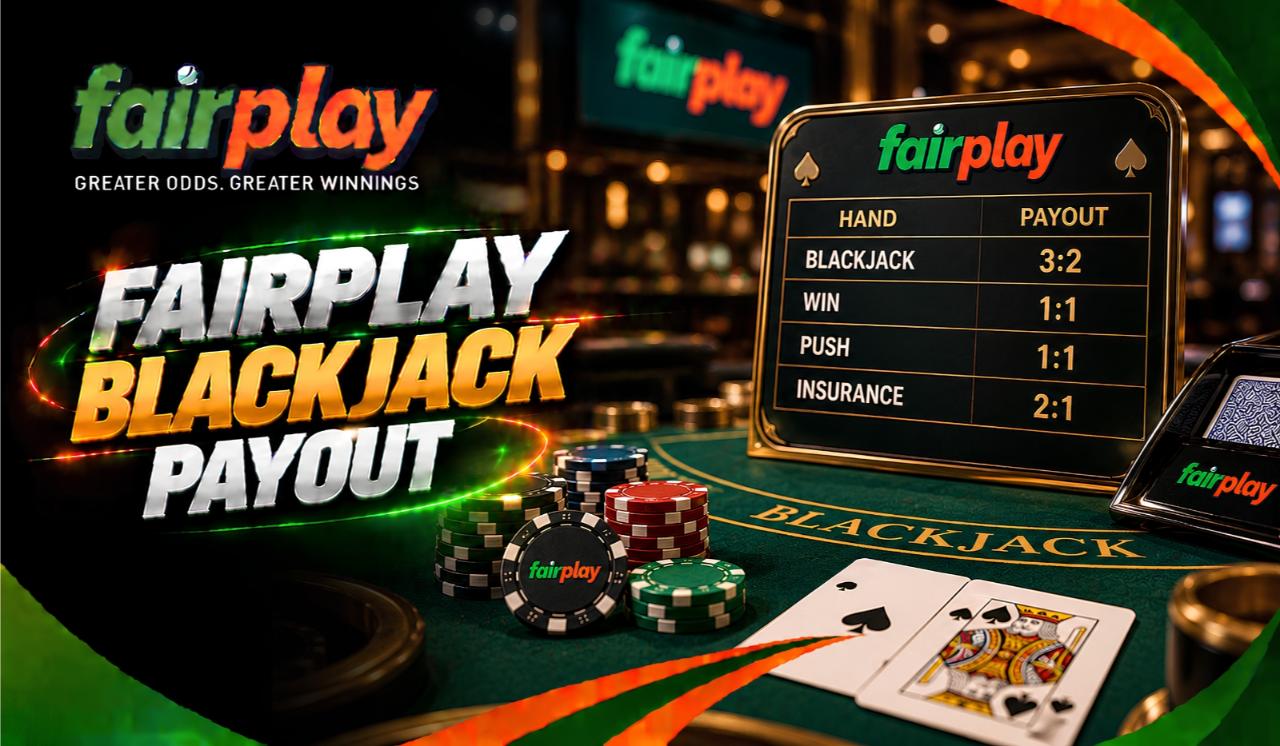
FairPlay Blackjack Payout: Table felt printed with the blackjack payout rule beside the betting box
The natural's payout is printed on the felt and repeated in the table info panel. Two seconds of reading beats a fortnight of strategy practice.

Four lines that carry most of the value

A complete chart runs to hundreds of cells and you can start without any of them. Aces and eights always get split. Tens and fives never do. A hard eleven gets doubled against everything except an ace. Hard twelve through sixteen stands when the dealer shows 2 through 6 and draws when they show 7 or higher.

Those four lines cover the large majority of what actually lands in front of you, and they take out most of the distance between guessing and playing. The awkward corners — soft seventeens, the handful of surrender spots — will come with repetition, and ₹50 tables are exactly where repetition is supposed to happen.

The hand with no right answer

Hard sixteen against a dealer ten is the worst position the game can put you in, and it will find you regularly. Draw and you break more often than you survive. Stand and you lose to nearly anything the dealer assembles, because that ten only breaks 21.2% of the time. Both roads lose money over the long run. The chart is not rescuing you, it is telling you which road loses less.

Worth knowing before it happens, because the hand feels like an error whichever way it falls, and I have watched people rebuild their entire approach around two of them in one evening. A hand you played correctly and still lost is not information. It is what a small edge looks like from the inside of a single session.

Stakes, studios and the pace of the thing

RNG blackjack starts around ₹50, while live dealer tables generally open between ₹100 and ₹200, dealt out of studios that keep running through the small hours on IST. There is no separate Nizamabad edition of any of this — the table list, the wallet balance and the sign-in screen are the same build that loads everywhere else, and FairPlay India is one product on one set of UPI rails rather than a stack of regional editions.

Live tables give you a few seconds of thinking time per decision, which is genuinely useful while those four lines are still new. An RNG table will happily let you fire off a hundred hands in the time it takes the kettle to boil, and you will not have thought about a single one of them. Before sitting, check two things in the table info: what a natural pays, and whether the dealer draws or stands on soft seventeen. Both move the price further than any decision you will make later. If you want a firmer ceiling on the evening, deposit and session limits live in your account settings — responsible gaming walks through all of them, and the casino page lays every game's house edge out side by side so you can see where blackjack actually sits.

No Account Yet

Starting from nothing on a wet evening

If you have never opened one of these tables, this is the order things happen in. Kishore did the whole thing on my terrace between two cups of tea.

The account comes first and it is not much of a ceremony. You go to FairPlay register, give a mobile number, take the OTP, pick a password you have not used elsewhere. From then on FairPlay login is that same number and password, and the account ID it creates is the one thing support will ever ask you for. Kishore wrote his down on the back of an auto permit renewal slip, which I would not recommend, but he still has it.

Money goes in through UPI — the same GPay or PhonePe app already on the phone. The deposit page covers the small stuff that trips people up, mainly the UTR reference number you sometimes have to paste back in, and the payment methods page lists what else is accepted. Get the verification done the same evening rather than the night you first want to take money out; withdrawals ask for documents, and it is a much calmer job when nothing is riding on it.

Then, before touching a real table, spend twenty minutes with the four lines above and the bust column. It is boring and it is worth more than any deposit bonus. Start on the ₹50 RNG tables where a wrong decision costs less than a bus ticket to Armoor. Move to a live studio table once you can make the standard moves without stopping to think, because the live tables give you a countdown and a dealer waiting, and hesitation there costs you hands.

One more thing about the first week. Look at the bonus terms before you claim anything. Blackjack usually contributes at a reduced rate towards wagering requirements, precisely because its edge is so low, so a bonus built for slots can quietly lock your balance behind a target you will never clear at a card table. Read the contribution table first and decide whether you want the offer at all.

FairPlay Live Casino Dealer: a dealer working a player and banker table in a studio
Live studio tables run on a timer. Learn the standard moves on ₹50 RNG tables first, where nobody is waiting on you.

What Gets Sold Locally

The predictor apps and the shoe trackers

Every district has these groups and Nizamabad is no exception. The pitch is always the same, and so is the reason it cannot work.

A fortnight after that Wednesday, Kishore forwarded me a message from a group somebody had added him to. A man was selling a blackjack shoe tracker for ₹2,500 — screenshots of a green dashboard, a running count ticking along beside a live table, and a claim about a fixed monthly return. Kishore wanted to know whether it was worth the money. It is worth exactly nothing, and the reason has nothing to do with the software being badly built.

Card counting works when cards leave the shoe and do not come back, so the composition of what remains drifts in your favour or against it. RNG blackjack rebuilds the shoe between every hand; there is no drift to track because nothing persists. Live studio tables use continuous shuffling machines or cut well before the shoe runs down, which strips out the penetration a count needs to become useful. The tracker's dashboard is drawing a number from data that has no predictive content. It would produce the same confident output pointed at a coin.

The second thing sold around here is worse: an account. Someone offers to arrange an ID for you over WhatsApp, handles the deposit on your behalf, sends screenshots of a balance. What you have then is not an account — it is a number in somebody else's ledger, and when the payout is refused there is no ledger to appeal to. Open your own through registration, keep the credentials to yourself, and read the FairPlay ID page, which sets out why an agent-held login leaves you with no claim on your own money.

The tells are consistent enough to list. A guaranteed win rate. Payment demanded in advance for a strategy. A private group where only the winning screenshots ever get posted. A support handle that messages you first rather than the other way round — real customer support is reached from inside your own account, and nobody legitimate will ever ask you for a password or an OTP. If a system genuinely beat a game with a half-percent edge, the person holding it would be playing it, not selling it for ₹2,500 to auto drivers in a district Telegram group.

And keep the ordinary discipline separate from all that. Set a number for the evening before you open the app, and stop at it whether the last hand won or lost. Every limit worth having is in your account settings, and the responsible gaming page explains what each one actually does. A game that costs half a percent still costs something, and the only genuinely uncontrolled variable in an evening is how long you sit there.

FAQ

Blackjack questions

Insurance, 6:5 felt, counting software and the hands that feel wrong however you play them.

Read all FAQs
Is blackjack really the cheapest game in the FairPlay casino?

Played to a chart, at a table with sane rules, yes — around 0.5% against you, where Andar Bahar sits at 2.15% and European roulette at 2.70%. But that number is conditional in a way the others are not. Andar Bahar charges 2.15% no matter how you bet it; blackjack charges half a percent only to the person making the right move each hand. Guess your way through and the real cost climbs to several times that, which is why the game rewards ten minutes of reading more than any other table in the lobby.

Why is insurance considered such a poor wager?

Count the shoe. Six decks minus your two cards and the dealer's upcard leaves 309 unseen cards, of which 96 are worth ten. That works out to 31.07%, and a 2 to 1 payout needs 33.33% just to break even. The shortfall is a 6.80% house edge — the priciest thing anyone will offer you on this site, roughly two and a half times what a roulette spin costs. It gets taken because it is dangled at the exact second your stomach drops, and because someone decided to call it insurance rather than a side bet.

How much does a 6:5 table quietly take from me?

About 1.42% of everything you stake, on top of whatever the rest of the rules cost. A natural lands roughly 4.75% of the time, and each one pays three-tenths of a stake less than it should: ₹1,200 on a ₹1,000 bet instead of ₹1,500. Put those two numbers together and a game that cost you half a percent now costs nearly two. On a night where you turn over ₹2,150 that is the difference between about ₹11 and about ₹41. The payout is written in the table info before you sit.

What am I meant to do with hard sixteen against a ten?

Lose, mostly. Draw and you break more often than not; sit still and the dealer beats you with almost anything, since a ten only breaks 21.2% of the time. There is no move that turns the hand profitable — the chart is just naming the cheaper defeat. Surrender if the table offers it, otherwise take the card. Knowing in advance that the hand is a write-off saves you from rebuilding your whole approach around it after two bad ones in an evening.

Why does the dealer's upcard decide so much of my play?

Because it is a forecast of how the dealer's hand finishes, and your best move depends entirely on that forecast. A six on the felt breaks 42.3% of the time; an ace breaks 11.5% of the time. Facing the six you can park a rotten fourteen and let the dealer walk into trouble on their own. Facing the ace, parking a fourteen just loses politely — you have to draw and try to build something, because hoping is not a plan against a hand that survives nearly nine times in ten.

Can anyone count cards on the tables here?

No, and the reason is structural rather than a matter of skill. RNG blackjack rebuilds the virtual shoe between hands, so nothing carries forward to count. Live studio tables run continuous shufflers or cut deep into the shoe long before the count could mean anything, which removes the penetration the whole technique depends on. So every counting course, tracker app and Telegram spreadsheet sold for online play is charging money for a method the software has already switched off.

How much of a strategy chart do I honestly need?

Four lines get you most of the way. Split aces and eights, always. Leave tens and fives unsplit, always. Double a hard eleven unless the dealer shows an ace. Sit on hard twelve through sixteen when the dealer shows 2 through 6, and take a card when they show 7 or better. Those four cover the bulk of what gets dealt to you, and the fiddly bits — soft seventeens, surrender spots — can be picked up slowly on a ₹50 table where a mistake costs less than a plate of mirchi bajji.

What do the tables cost to sit at, and where should I start?

RNG blackjack opens at about ₹50; live dealer tables generally want ₹100 to ₹200, and VIP rooms a great deal more. Each table posts its minimum, its maximum and its full rule sheet before you take a seat. Read the rule sheet, not just the minimum — what a natural pays and whether the dealer draws on soft seventeen will move the price of the game further than any decision you make once the cards are out.

See all FAQs

Get Started

Learn four lines, then take the best price in the building

Open an account, top it up over UPI, and let the ₹50 tables absorb your mistakes while the decisions are still unfamiliar.

  • ~0.5% cost when played to a chart
  • 25+ live tables running nightly
  • ₹50 buys a seat on the RNG tables

Explore FairPlay