

Match Winner
Back a side or lay it. A league fixture can finish dead level, and each market states in its own rules whether that voids your stake or settles it — read that line first.
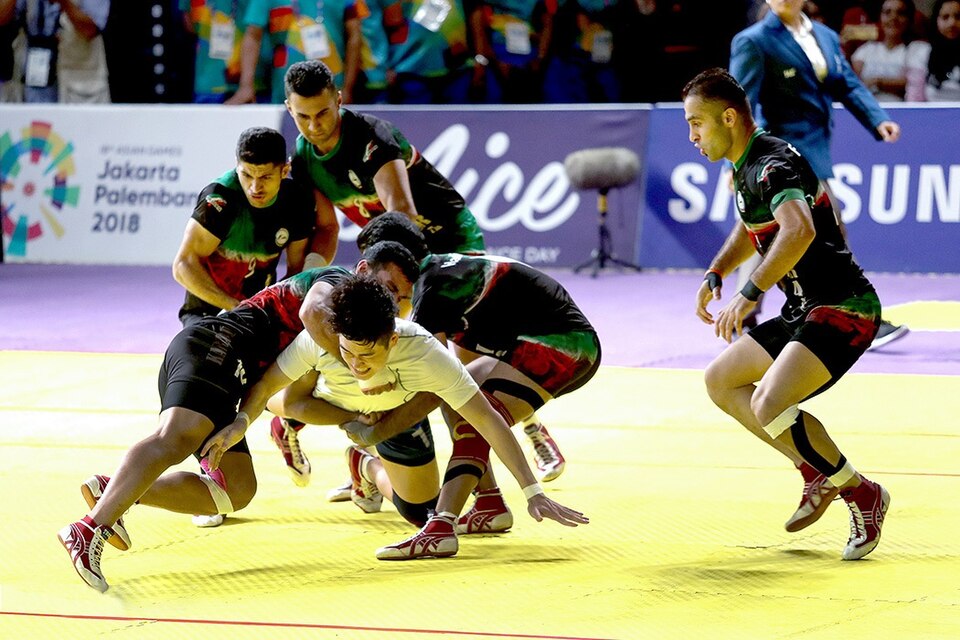
Made for India
Hisar goes quiet early in December and then the kabaddi comes on. FairPlay prices a Pro Kabaddi night the way the mat actually plays — raid points, super raids, super tackles, handicaps, all-out lines — with in-play odds that lurch the second a defence is down to three men. Stakes open at ₹100.
Prices shown are illustrative
Jaipur Pink Panthers v Bengaluru BullsLive
Min 100 · Max 25,000
Min 100 · Max 25,000
Min 100 · Max 25,000
Tamil Thalaivas v Haryana Steelers
Min 100 · Max 20,000
Gujarat Giants v Bengal Warriorz
Min 100 · Max 20,000
Reading The Mat
No goals here, and no wickets. Every number on a kabaddi board is really a guess about raids, tackles and which side runs out of bodies first.
| Action | Points | When it happens |
|---|---|---|
| Touch point | 1 per defender | The raider makes contact and gets himself home over the midline |
| Bonus point | 1 | He steps past the bonus line with six or more defenders still standing |
| Tackle point | 1 | The defence holds him on their own half until the raid is dead |
| Super tackle | 2 | Three defenders or fewer are left on the mat and they bring him down anyway |
| Super raid | 3 or more | One trip across the line comes back worth three points or better |
| All out | 2 bonus | All seven are out; the side then walks back on at full strength |
| Do-or-die raid | Nothing, or out | The third barren raid in a row — he scores or he walks off |
Count all-outs, not raids. Two bonus points reads like small change until you picture what follows it: seven men walking back on cold, a defence sorting out who stands where, up against a side that has been scoring in a rhythm since the last time-out. Four minutes of that decides more kabaddi matches than any raider does.
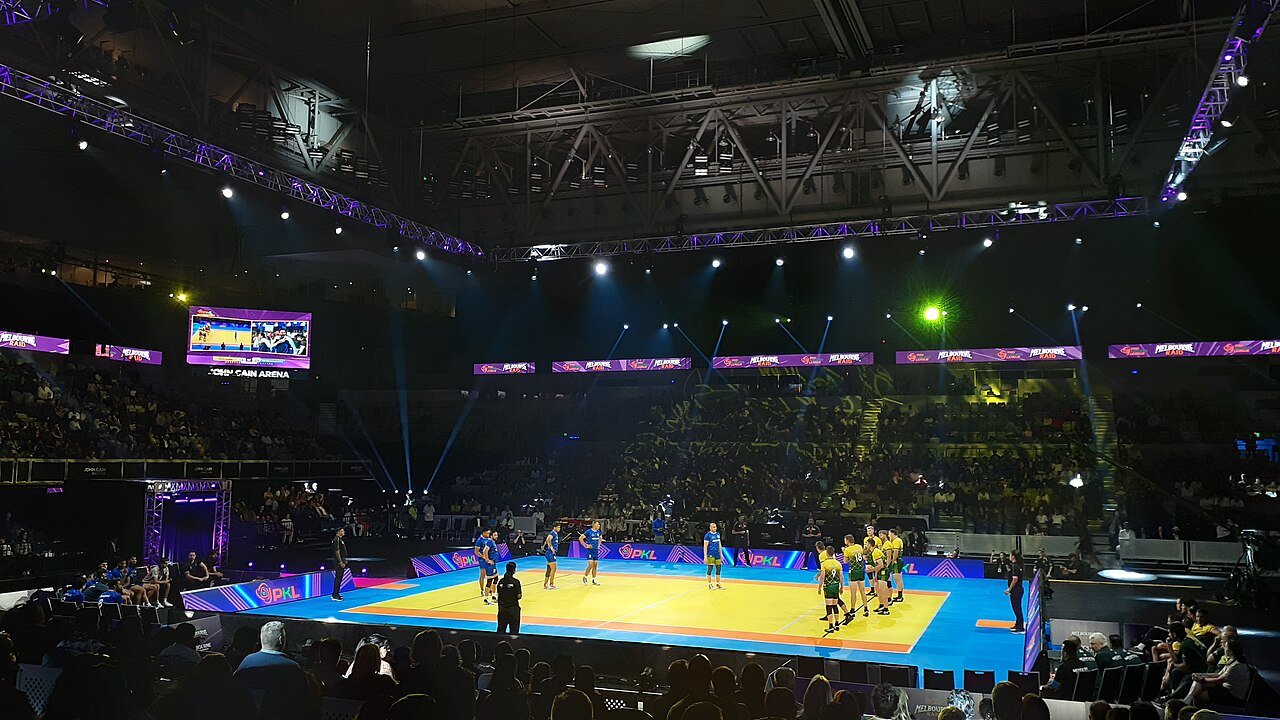
Betting Markets
Around forty markets open on a PKL fixture. These are the ones with people standing on both sides of them.
Back a side or lay it. A league fixture can finish dead level, and each market states in its own rules whether that voids your stake or settles it — read that line first.
Over or under the two scores added together. A single all out shifts this by roughly eight to twelve points, which is why the line steps instead of drifting.
Raid points on their own, for a side or for one named raider. Tackles and all-out bonuses are excluded, so a team can win comfortably and still land under.
Yes or no on any raid in the match bringing back three points or more. Take a defence down to three men and this price collapses within seconds.
Two points for a tackle completed with three or fewer defenders left standing. Sides built around a settled pair of corners land these far more often.
The underdog starts with points in hand. Worth a look when a top side draws a bottom side and the outright price has nothing left in it.
Whoever ends the night with the most raid points, settled off the league's own statistics. The value tends to sit on a stand-in covering an injured starter.
Whether either side gets all-outed at any stage. Once a team is down to its last two men on the mat the answer is close to written, and the price says so.
The League
Listed roughly north to south, so from Hisar the sides your neighbours already have a hard opinion about come first. Almost every large Indian city owns one, and that is a fair part of why PKL turns over the money it does.
| Franchise | Home city | Local page |
|---|---|---|
| Dabang Delhi K.C. | Delhi | FairPlay Delhi |
| U.P. Yoddhas | Noida | — |
| Haryana Steelers | Sonipat | — |
| Jaipur Pink Panthers | Jaipur | — |
| Patna Pirates | Patna | — |
| Bengal Warriorz | Kolkata | FairPlay Kolkata |
| Gujarat Giants | Ahmedabad | FairPlay Gujarat |
| U Mumba | Mumbai | FairPlay Mumbai |
| Puneri Paltan | Pune | FairPlay Pune |
| Telugu Titans | Hyderabad | FairPlay Hyderabad |
| Bengaluru Bulls | Bengaluru | FairPlay Bangalore |
| Tamil Thalaivas | Chennai | FairPlay Chennai |
Getting Started
Four steps. The third is the one people skip, and the one they end up wishing they had not.
The house I watch kabaddi in sits on the Azad Nagar side of Hisar, ten minutes off Jindal Chowk if the auto behaves. December here does one thing properly and that is fog. By half past eight it has come in off the fields beyond the bypass, the street lights have gone to smudges, the terrace is finished for the night, and everybody folds into the back room with the heater and one phone propped against a steel tin of sugar. Tamil Thalaivas against Haryana Steelers, nine o'clock. In that room Haryana is not a franchise somebody bought. It is family, and the arguing starts well before the toss.
The board had the Thalaivas at 1.74 and the Steelers at 2.14. Nobody on that charpai believed the Steelers were a 2.14 side, which is precisely the sort of belief that empties a wallet, so I said it out loud, took the abuse for it, and then sat on my hands for eight minutes. That is more or less the whole method. Kabaddi gives away information faster than any sport I follow, and the people who lose money on it are the ones who bet before the sport has said anything.
Say you decide the Steelers are worth ₹500 at 2.14. You tap the blue number — blue backs, pink lays — and a slip opens along the bottom of the screen with the stake box empty. Type 500 into it. The slip does the arithmetic in front of you before you commit: ₹1,070 comes back if it lands, ₹570 of that is profit, ₹500 is gone if it does not. Nothing to work out afterwards, no percentage hidden in the small print.
Confirm, and the bet sits there until somebody takes the other side of it. On a fixture with both teams still in the play-off argument that happens instantly. On a dead rubber in the last week of the league you will sometimes watch your stake wait a beat before it matches. Once it is on, the number on the board stops applying to you. You hold 2.14. The price moves for everyone else.
Then the match starts and the price begins arguing back. Ten minutes in that night the Steelers had lost both corners to bad reads and my number was climbing. This is where kabaddi separates itself from a run chase: nothing here decays gently. A do-or-die raid lands, a defence goes to four, and the price jumps a whole step rather than sliding into it. If you want out before the end you can lay the same side back at whatever it is trading at then and keep the difference either way, which is the bit most people who arrived from the cricket side of the app take a full season to get comfortable with.
None of the above works without one, and the account is the dullest ten minutes of the evening, which is how it ought to be. A mobile number, the OTP that arrives while you are still reading the screen, a password the phone will remember for you. FairPlay register lays the sequence out in order if you would rather see it before you start. After that first time you never look at it again — it is the same FairPlay login box every night, and on the app it is usually just a fingerprint.
Money is the next step and UPI is the sensible route: PhonePe, Google Pay, whichever handle you already use at the sabzi shop. It clears while you are still looking at the deposit screen. FairPlay India goes through the wallet and the payment rails properly if you want that detail. One thing worth saying plainly: the board my cousin looks at in Chennai is the board I look at in Hisar. Same fixtures, same markets, same wallet, same login screen. There is no separate Haryana edition of the product with its own prices in it.
Seven men out, two bonus points across, and the beaten side walks back on at full strength. Two points sounds like very little next to a forty-minute match. What it actually buys is a stretch of play against a team that has just been reassembled, with substitutes who were cold a minute ago and a defence that has to rebuild its shape while the other lot are already in rhythm.
On the total match points line an all out is worth somewhere around eight to twelve points once you add the bonus to the run of raids that usually follows. The market repriced roughly two raids after our back room did. Hearing the shouting start on the next roof before the tackle has even landed is not a trading model, but it is a decent substitute for one, and it is the plainest in-play edge this sport hands an ordinary viewer.
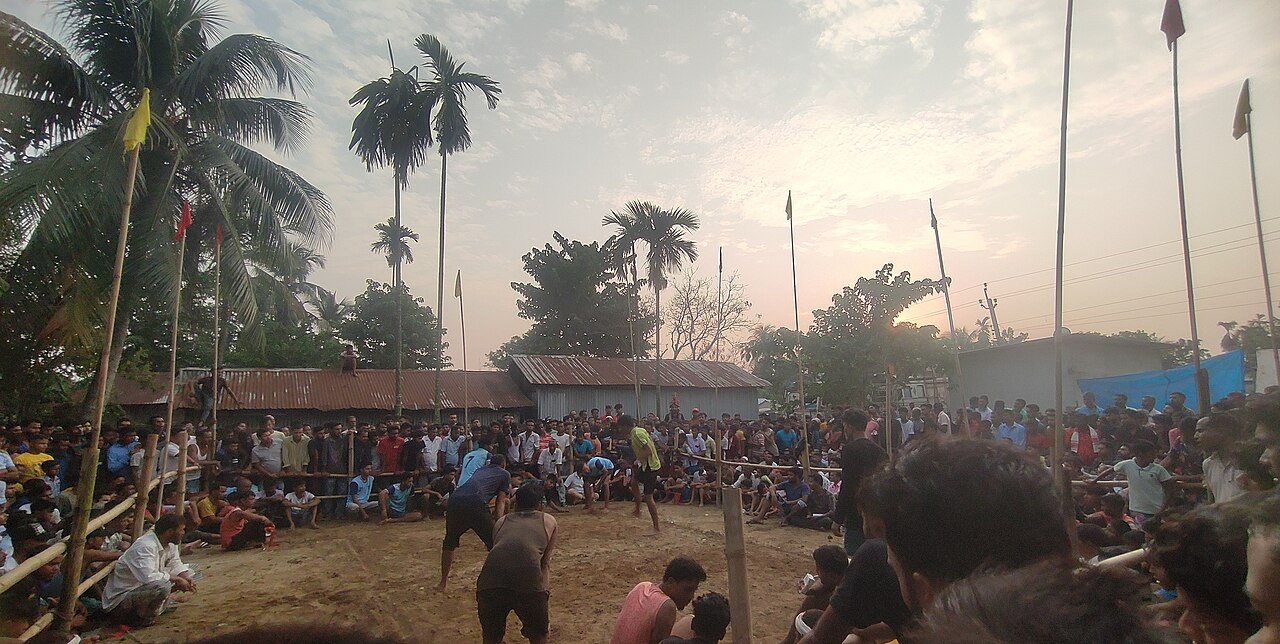
Two raids that bring back nothing, and the third has to produce. Score or the raider walks off. It is the most predictable pressure in Indian sport, you can see it coming from two raids away, and nobody sitting near me has ever once bothered to count.
Sent in against seven fit men, a do-or-die raid usually ends in a tackle point. Sent in against four, it turns into a super raid often enough to be worth having a view on before it happens. Counting empty raids costs you nothing except attention. Most of the money going onto a PKL match is placed by people watching the same broadcast and not counting.
Raiders sell the league. Every boy in Haryana with a mat burn on his knee wants to be one, and the highlight reel is mostly raids. But a team's betting profile is written by its two corner defenders. A settled pair means raid points conceded slowly, do-or-die situations forced on the other side, and a steady trickle of super tackles — all of which drags the match total down and makes the under the sensible half of that market.
Which is why the team sheet is worth more here than the form guide. Lose a first-choice corner and the side taking the mat is not the side the opening price was built around. Kabaddi team news moves the market late, simply because far fewer people go looking for it than in cricket. Go looking for it.
So much of a side's scoring goes through one or two men that individual form shows up here in a way it rarely does in a team sport. A raider in touch will drag an ordinary team through three matches on his own. The same man a fortnight later cannot get past the covers, and suddenly the whole attack looks broken.
Highest raider and total raid points are the two lines that lag that change, usually by a match or two, and most of all when a substitute has come in for somebody injured and started scoring. The gap between what the mat is showing and what the price still assumes is where the value lives. It does not stay open long — one big televised performance and it has gone.
Kabaddi season in Haryana brings the tip sellers out. Somebody adds you to a group with a Steelers crest on the display picture and a running commentary of raids called correctly after they have already happened. Then comes the monthly fee for the confirmed calls. Then comes the man who wants a UPI transfer to a personal handle, because he can supposedly get you a better rate than the app will.
Two rules and none of it can touch you. Money goes in through the deposit screen inside your own account and nowhere else — not to a person, not to a QR code somebody forwarded you, however many crests are on it. And nobody legitimate will ever ask for the OTP that lands on your phone. That code is the account; hand it over and you have handed over the account. The rest answers itself with one question: a man who genuinely knew which raid was coming would not be selling that to strangers in Hisar by the month.
A standard PKL fixture takes ₹100 at the bottom and ₹25,000 at the top, with the play-off nights carrying more. Those ceilings sit under the cricket ones for one reason: there is less money on the other side of a kabaddi market to match you against. That same thinness is what makes the prices beatable in the first place, so it is a tax worth paying.
Player markets settle on the league's official statistics, which matters on the nights when a raid point is credited one way on a broadcast graphic and another way in the record. League games can finish level, and every market states on its face how a tie is handled. Winnings land in the wallet the moment the market settles, and a withdrawal from a verified account is usually in the bank inside ten minutes.
One last thing from the same back room. PKL runs most nights for weeks on end, and that is exactly the shape of season that turns a ₹100 habit into something heavier without anyone quite noticing. Set your deposit limit in responsible gaming in the first week, not during the play-offs. The Steelers, since you ask, did not win that night. The 2.14 was a fair price and a losing one, and both of those can be true at once.
FAQ
Rules, markets and ceilings, written for people who already know the sport better than they know the betting.
Register, put money in over UPI, then pick a PKL fixture off the board. What you will find there is match winner, total match points, total raid points, super raid, super tackle and points handicap, plus a long tail of smaller lines. Stakes run from ₹100 to ₹25,000 on a league night. Prices keep moving while the match is on, so you can also wait eight minutes, see which defence is holding, and take your price then.
One raid that comes back worth three points or more. It nearly always happens against a defence that is already short, because a raider chasing three touches only has to beat men who are spread too thin to cover for each other. FairPlay runs it as a yes-or-no line for the whole match, and the moment either side drops to three players on the mat that price shortens hard.
A defence down to three men or fewer that still stops the raider takes two points rather than one. The rule exists so a side being taken apart has a way back into the match instead of simply drowning. From a betting point of view it matters because teams with a settled pair of corner defenders convert these far more often than the table would suggest, and that habit shows up in the total points line.
Badly. Two bonus points go across immediately, all seven players then come back on, and the match restarts with the swing already banked and a defence that has to work out who is standing where. Concede two of them and you are roughly ten to fifteen points down in a sport where winning margins are usually far tighter. On the total match points market, one all out is worth somewhere near eight to twelve points.
Two raids in a row that bring back nothing, and the third one has to produce. Score, or the raider is out. It is the most predictable pressure moment in the sport and the single most useful thing to watch for once you are betting in-play, because you can see it coming two raids away. Sent in against a full seven-man defence, a do-or-die raid ends with a tackle point more often than not, and the momentum goes with it.
The Pro Kabaddi League end to end — every one of the twelve franchises, then the eliminators, the qualifiers and the final, which run raised ceilings. Outside PKL there are markets on Asian Games kabaddi, the Kabaddi World Cup, circle-style Punjab kabaddi, and a selection of state and national championship fixtures to fill the gap between seasons.
League-stage kabaddi can and does finish level. What that means for your stake depends on the market you took: some match winner lines void and hand the stake back, others carry a tie option priced on its own. Knockout matches are different again, since they go to extra time or a golden raid and have to produce a winner. Every market prints its own rule above the price, before you stake.
₹100 at the bottom and ₹25,000 at the top on an ordinary PKL fixture, with the play-off nights going higher. Those ceilings sit under the cricket ones because kabaddi markets are thinner — fewer people are betting them, so there is less money waiting on the other side to match you against. Whatever tonight's ceiling is, the board prints it beside the fixture before you put anything on.
Explore FairPlay