

What happens in the sixty seconds after you tap Pay
Ravi's ₹500 crossed four different systems that evening on the wall, and not one of them took long enough for either of us to notice. Knowing the shape of that journey is useful anyway, because the places a payment can get stuck are exactly the places you will be asked about later.
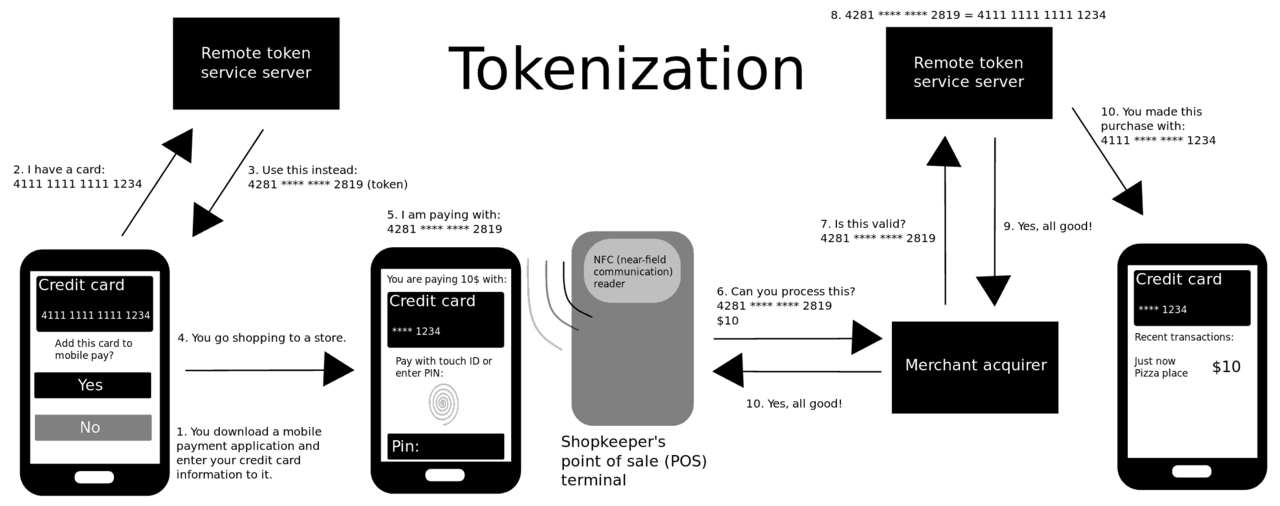
The deposit screen passes your phone over to your UPI app. Your UPI app asks your bank two questions at once — is the money there, and are you actually you. The PIN answers the second one. Your bank replies into the UPI network, the network tells the payment partner the transfer has settled, and the partner tells the wallet to show a new number. Four handoffs. Four places for a wet evening on the Godavari coast to get in the way.
Nearly always the four of them finish before your phone is back in your pocket, which is why the clearing time on this page says seconds rather than something hedged. The rails behind it are the same UPI rails your kirana shop near Bhanugudi Junction uses for a ₹40 packet of biscuits. Nothing exotic is happening. Money leaves a bank account with your name on it and turns up in a wallet with your name on it, and the only reason this page runs to several thousand words is the small number of evenings when it does not.
The night the signal went at the harbour end
A week later, first week of November, one of those low-pressure systems sitting out in the Bay. Rain came in sideways off the water and half of Beach Road put its hood up. Ravi tried ₹1,000 this time and got the debit message from his bank almost instantly. The wallet stayed exactly where it was.
What he wanted to do, immediately, was pay again. What we did instead was open his UPI app and read it, which took about four seconds and settled the whole thing. It said Success. That single word tells you the money is already across and the only outstanding job is matching it to the right account — a job that finishes on its own more often than not, and finishes in minutes once somebody has a reference number to search on.
We gave it fifteen minutes under the awning of the tea stall. It landed at about minute nine, somewhere between the two of us arguing about whether the covers would come off at all. That fifteen-minute window is not a stalling tactic; it is roughly how long a payment that is merely slow takes to stop being slow. Anyone who contacts support inside the first five minutes is usually told to wait, which is a wasted message either way.
The twelve digits to grab before the receipt closes
The UTR is the single most useful thing you can carry out of a payment screen. It is a twelve-digit reference your bank attaches to the transaction, and some apps label it RRN or simply reference number. Google Pay, PhonePe and Paytm all show it on the receipt once the transfer completes, generally under a line about transaction details that most people scroll straight past.
Screenshot it. Every time, without deciding first whether this particular payment is going to need it. The habit costs two seconds and the alternative is trying to describe a payment by amount and approximate time, which is like describing a man by his height and the colour of his shirt. A UTR names one transaction and only that transaction, so a message carrying one turns into a search rather than an investigation.
Ravi keeps his in a WhatsApp message to himself, which I thought was daft until I watched him find a payment from three months earlier in about six seconds. Whatever you use, use the same place every time.
Ravi's brother's phone, and why the name decides everything
The one genuinely expensive mistake on this page is paying from an account that is not yours. It happens most often the way it nearly happened to us: your own UPI is throwing errors, somebody next to you has a working phone, and sending ₹500 from theirs feels like obvious common sense in the moment.
It is not. A payment from a brother's account, a parent's account or a friend's phone cannot be credited to your wallet at all. It has to be reversed, which means support, which means days instead of seconds, and which means the match you were trying to bet on finished several innings ago. The reason behind the rule is simply symmetry — withdrawals travel back to an account carrying your registered name, so deposits have to enter through one as well. Money leaves the way it came.
If your own rail is down, take a different one. That is what the table further up this page is for. IMPS from your own bank at ₹500 beats a working UPI app belonging to somebody else, every single time, even when it feels slower in the moment.
Do not pay twice to fix a payment
Money leaves, nothing appears, and the hand reaches for the phone again. Almost everybody feels that pull, and it is nearly always the wrong instinct. Run the two branches and you can see why. If the first payment was only slow, you now have two deposits and a reversal to arrange on one of them. If the first payment genuinely failed, the second is going to hit whatever wall the first one hit, because banks do not usually fix a cap or a maintenance window in the ninety seconds between your attempts.
So the sequence is: read the UPI app, find your row in the table, wait the fifteen minutes if the case calls for it, and send one message with a UTR in it if the wait does not resolve it. That handles very nearly everything, and it costs you a quarter of an hour rather than a week of unpicking duplicate transfers.
If you have not opened an account yet
None of the above applies until there is a wallet to pay into, and plenty of people read a deposit page before they have got that far. The order is: FairPlay register with your phone number and an OTP, then FairPlay login with the credentials you just set, and only then open the deposit screen. Registration takes a couple of minutes on a decent connection and rather longer if you are doing it on the beach in a squall.
Do the verification early, on a quiet afternoon, rather than at the moment you first want to take money out. Having your documents accepted while nothing is riding on it turns your first withdrawal into a non-event. Leaving it until the balance is up and you want it out is how a ten-minute payout turns into two days of uploading photographs of a PAN card in bad light.
Everything on this page works the same way for an account opened in Kakinada as for one opened anywhere else in the country. There is no separate Andhra build of the app, no different deposit screen, no regional wallet — the same markets, the same balance and the same UPI rails throughout. FairPlay India covers what the product looks like nationally if you want the wider picture.
The people who message you first
Deposits attract a particular kind of fraud, and it is worth ten minutes of your attention because the money involved is real and the recovery is difficult. The pattern is nearly always the same: a stranger reaches you on a messaging app, offers to load your wallet at a discount or to sort out a stuck payment, and asks you to send money to a UPI ID they supply.
Two things to hold on to. First, the payment details you use come off the deposit screen inside your own signed-in account and nowhere else — not from a chat, not from a comment under a video, not from a number in a group. Second, and this is the one that catches good, careful people: on UPI you enter your PIN to send money, never to receive it. If somebody sends you a collect request and tells you to approve it with your PIN so your refund can come through, that request is going to take money out of your account, not put it in. There is no situation in which receiving a refund needs your UPI PIN.
The rest follows from those two. Nobody legitimate asks you to install a screen-sharing app to sort out a deposit. Nobody legitimate needs your OTP. A social media account that replies to your public complaint within thirty seconds offering to help by direct message is very often not who it appears to be — go back through support from inside your account instead, which is slower by a few minutes and safer by a wide margin.
Decide about the bonus before the money moves
A bonus attaches itself at the instant of the deposit and generally cannot be applied afterwards. That makes it a decision to take while your thumb is still hovering, and it deserves a moment of actual thought rather than a reflex tick on the way past.
The question to ask is what you plan to do with the money. If you are going to be turning the balance over anyway across a season of cricket, the wagering requirement is volume you were going to generate regardless, so take the offer. If you intend to deposit ₹2,000, back two teams over a weekend and take out whatever is left, a wagering requirement will lock up part of that balance for no benefit at all, and declining is straightforwardly the better call. Read the terms before, not after — that is the entire skill.
The caps you set on a quiet afternoon
Deposit limits are, to my mind, the most useful setting on the site, and hardly anybody opens the page. You can cap what you put in per day, per week or per month from your account settings. A new cap bites straight away. Raising one later goes through a cooling-off period before it does anything.
That delay is the entire point of the design, and it is worth sitting with for a second. A number you choose on a still afternoon at home, tea in hand, nothing riding on anything, is a different number from the one you would choose at eleven at night with a match going badly and the rain about to end it. The cooling-off period is a mechanism for letting the calm version of you overrule the other one. Responsible gaming sets out the full range of them, and support can put one in place for you inside a minute if you would rather ask than click.
One wallet, and the way back out
A single deposit funds the lot. The same balance covers sports betting and every table in the casino, with no transfer step in between and no second account to keep topped up. Move from an Andhra Ranji scorecard to a live table and back again and the number at the top of the screen is the same number throughout.
Going the other way, withdrawals from a verified account normally reach a bank in under ten minutes. That figure holds up in practice, but it holds up because the verification was done at some earlier, calmer point. Do it in advance and the last section of this story is short: money in from a wall on Beach Road in seconds, money out to your bank in minutes, and the only thing left to argue about is whether the covers are coming off.