
Bet delay
Press place and the stake waits in a short queue before it is accepted. The pause is there because no two people are watching the same second of the match, and it stops anyone staking on a ball they have already seen land.
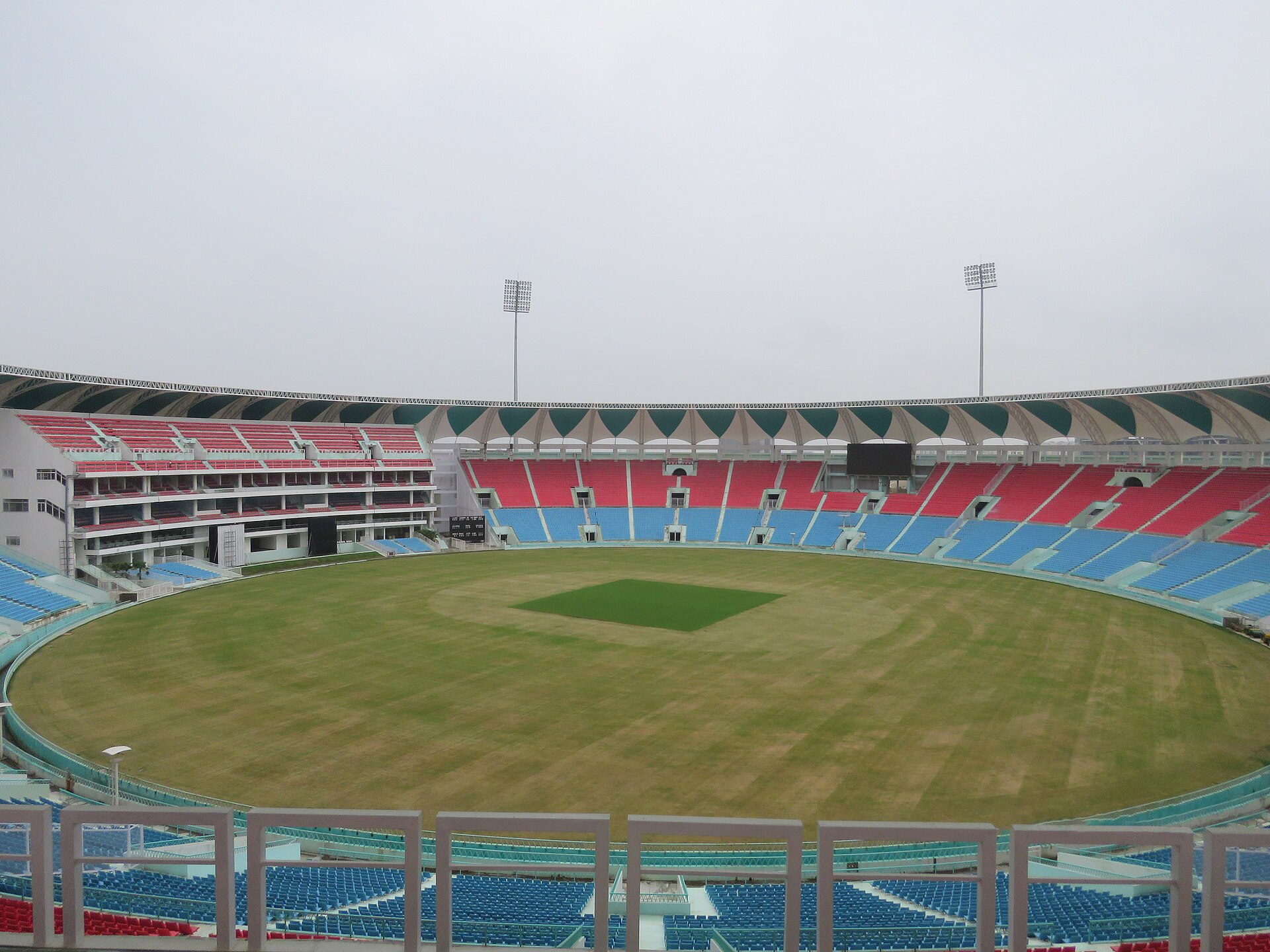
In-Play Markets
A chase was eleven overs old, the terrace in Sector 4 had gone quiet, and the FairPlay price on my phone had already moved twice before the picture caught up with it. That gap is what live betting really turns on. Below: how in-play odds are formed, why your screen is late, and how to shut a position down while the match is still going.
Start Here
Hardly anybody thinks about this gap before placing a first in-play bet, and it settles more results than any read on the game ever will.
| How you are watching | Roughly how far behind | What that means for you |
|---|---|---|
| At the ground | None | Nothing sits between the shot and your eyes. Every number on the exchange is still catching up with what you have already watched happen. |
| Cable or DTH television | About 5–10 seconds | Near enough to live for most purposes, though the price on your phone tends to twitch a beat before the picture explains why. |
| Streaming app on 4G | About 30–60 seconds | A whole over can be bowled and settled on the exchange before it ever reaches a handset on a Bokaro rooftop. |
| Live score app | About 10–20 seconds | Quicker than any video, and still a step behind the people whose money is actually setting the number. |
Why this bites harder here than it looks on paper. Almost everyone on our stretch of Sector 4 follows the IPL through a streaming app on mobile data, which is the slowest row in that table by a distance. Push a monsoon evening on top, when the whole block is indoors and leaning on one tower, and the lag stretches further still. So when a number shifts and there is nothing on your screen to explain it, the market has not glitched. Something has happened and you have not been shown it yet.
The practical version of that is simple enough. Do not treat a sudden move as an opportunity. Treat it as news you are receiving late, and wait for the picture to tell you what the news was before you decide anything.

Sport by Sport
Every sport keeps its own rhythm once the whistle has gone. Knowing where the jolt arrives tells you when to have a finger over the button and when to sit back.
| Sport | Fastest market | What moves it | Suspends on |
|---|---|---|---|
| Cricket | Runs in the next over | Falling wickets, the rate a chase still needs, and dew settling on the outfield once the innings turns | At every dismissal, and again in the gap between overs |
| Football | Next goal | Goals, a sending off, a spot kick given, and a losing side pushing defenders up the pitch | The instant a goal, a red card or a penalty is awarded |
| Tennis | Next game winner | Break points, where one loose service game rewrites the whole match price in under four minutes | At the close of each game, before the players change ends |
| Kabaddi | All out in match | A side stripped down to two or three men still standing on the mat | Once a raid finishes and the points have been added |
| Basketball | Live points spread | A run of unanswered baskets, foul trouble on a key man, and dead minutes at the end of a rout | During timeouts and at the break between quarters |
The Vocabulary
Three of them describe what the market does to you. The other three describe what you are allowed to do back.
Press place and the stake waits in a short queue before it is accepted. The pause is there because no two people are watching the same second of the match, and it stops anyone staking on a ball they have already seen land.
Around a wicket, a goal or a raid point the market shuts for a moment while the numbers are rebuilt. Nothing has broken. That short blackout is the platform refusing to take money on a price that has stopped meaning anything.
One tap that ends your bet early at a figure worked out on your behalf. It is quick and it is honest, and it will always hand back a little less than doing the same sum yourself would.
Backing a selection, then laying that same selection later at a price you choose. A few more taps than cash out, and nearly always a better number, because you decide what the exit is worth.
Picking a lay stake so both endings pay you an identical amount. Multiply the back stake by the back odds, divide that by the lay odds, and lay whatever the answer says.
Shut half the position and let the remainder run. Some of the upside survives if the match turns your way, and some of the damage is capped in advance if it does not.
Picture the setup, because the whole of this page comes out of it. Four plastic chairs on the roof of a Sector 4 block, May, the loo finally off the concrete and something like a breeze coming across from the plant side. A phone propped against a water bottle, running the second innings. Two yellow shirts in the group, because Ranchi is only a couple of hours down the road and Jharkhand has never entirely got over Dhoni. Somebody's father was watching the same match on the DTH box in the flat directly below us.
At the toss the chasing side had been available around 2.20. By the time the powerplay finished they were 1.60 and my rooftop had gone from arguing to silent, which on a Bokaro terrace is how you know a chase is going well. Nobody at that point had done anything except watch. The interesting part of the evening had not started.
Here is the thing that teaches you more than any strategy article. A cheer went up from the flat below — the father, on cable — a clear couple of seconds before our stream showed the ball being bowled. We heard the wicket through a concrete floor before we saw it on a screen. And the price on the phone had already begun to stretch before either of those things.
Follow the order of events. The bowler runs in. The stump goes back. People at the ground react instantly. Cable and DTH carry it five to ten seconds later, which is why the flat below knew first. Our stream on 4G was somewhere in the thirty-to-sixty-second band, so by the time we watched the bail spin, the exchange had already digested the wicket, suspended the market, reformed the price and reopened it at a number that reflected the new situation. The old price was never available to us. It only looked available.
That is what the roughly five-second acceptance delay on an in-play bet exists for. It is not the platform being slow. It is the platform refusing to let the man at the boundary rope quietly take money off the man on the rooftop, using nothing more clever than a faster picture. Once you understand which end of that queue you are standing at, in-play betting stops feeling like a race and starts feeling like a judgement call.
Back to the chase. Suppose the rooftop had actually put ₹1,000 on the chasing side at 2.20 before the innings began, and suppose the price has since come in to 1.60. There is a position sitting there worth more than it cost, and a decision nobody usually knows they have.
The line to remember: lay stake equals back stake multiplied by back odds, divided by the lay odds. So ₹1,000 times 2.20 is ₹2,200, and ₹2,200 divided by 1.60 gives ₹1,375. Lay ₹1,375 at 1.60 and the position is finished. If the chase gets home, the back bet returns ₹1,200 of profit while the lay costs ₹825, and ₹375 remains. If the chase collapses, the back bet drops the ₹1,000 while the lay collects ₹1,375, and ₹375 remains. The same figure, twice, whatever the last over does.
What has been swapped there is worth stating plainly. A bet that could have made ₹1,200 or lost ₹1,000 has become a bet that makes ₹375 and cannot lose. Sometimes that is the wrong trade and you should have let it run. The point is that it should be a choice you looked at and turned down, rather than one you never realised was on the table.
This is the half people skip, and it is the half that keeps a season alive. Say ₹1,000 went on a side at 1.80 and the match has gone the other way entirely — the price has drifted out to 3.00 and there is no honest argument left for the original view.
Same line, same order. ₹1,000 times 1.80 is ₹1,800; divided by 3.00 that leaves ₹600. Lay ₹600 at 3.00 and the loss is pinned at ₹400 regardless of what follows, instead of the whole ₹1,000 riding on a recovery nobody on the roof believes in. Nobody has ever told that story at a tea shop in Chas. Converting a large uncertain loss into a small certain one is unglamorous, and over a season it counts for more than any single result you will remember.
The cash out button performs exactly the calculation set out above and shows you the answer as a single figure. There is nothing underhand in it. It is quick, it works, and on a rooftop with a wicket falling it is often the sensible option simply because you will not fumble the maths.
It is also, consistently, a shade below what you would get by laying the selection yourself. The figure has a margin folded into it, which is the fee for doing the work while your hands are busy. Close one position a month and the difference is not worth an argument. Close positions most evenings through an IPL season and it adds up to a real sum, for the sake of about ten extra seconds of typing.
Pre-match prices are guesses made in a vacuum. Ten overs into an innings you are holding things nobody held at the toss: whether the surface is gripping, whether the ball is coming on, whether the dew has started to sit on the outfield, whether a side has actually turned up tonight. Sitting on your hands until that information exists, and only then taking a position, is close to the entire strategy. It costs nothing and it asks for no special skill.
There is a second half to it. Markets overreact to single events, because everybody reacts at the same instant. One wicket regularly drags a price further than the actual change in probability justifies. If you had a considered opinion before the toss and a single ball has swung the number hard against it, that is very often the best entry the evening will offer you — not a reason to throw the opinion away. Our cricket betting guide works through this ground by ground, including how differently a Ranchi evening behaves from a coastal one.
Reading all of that without a login is a bit like studying a scorecard from the road outside. The account itself takes a few minutes: a FairPlay register form with a mobile number, an OTP to prove the number is yours, then a first top-up. Money moves over the same UPI apps already on your phone, so a deposit from Bokaro behaves exactly as it would anywhere else — the markets, the wallet and the sign-in screen are one product, not a set of regional editions. There is no separate Jharkhand build waiting to be found.
Once the account exists, the FairPlay login screen is the only door you ever need, and it is worth bookmarking it so you are never hunting for it through a search box at the innings break. If you want the wider picture first — the sports on offer, the language options, the way payments run — the FairPlay India hub is the place to start, and the deposit guide covers what a first UPI transfer looks like at the other end.
My honest advice for a first live evening: keep the phone in your pocket for the powerplay. Watch a market suspend at a wicket and reopen at a different number, twice, without staking anything. Minimums here start at ₹100, so there is no rush to prove anything. The habit of watching before acting is the one worth building first, and it is far easier to build before there is money on the table.
Anyone who has followed a live match in a group chat knows the rhythm. A wicket falls, the market suspends, and somewhere a message arrives promising a confirmed session, a fixed over, an inside line from somebody's cousin who knows a groundsman. These arrive most thickly during the exact window when the price is frozen and you cannot check anything against a real market.
Treat all of it as noise. Nobody with genuine advance knowledge of a match sells it for ₹500 on Telegram to strangers, and a tip that lands during a suspension is worth less than nothing, because you cannot even test it against a live number. The other version of the same scam is a stranger offering to sell you an account, or to deposit on your behalf for a small cut. An account you did not open yourself is an account somebody else controls, and the day a withdrawal is due, that becomes an expensive lesson. Open your own through registration, put money in through your own UPI app, and read the payment methods page so you know what a legitimate transfer looks like before an illegitimate one is offered to you.
One more tell, since in-play is where it gets used: nobody official will ever ask for your password or an OTP mid-match to "reopen a market" or "release a cash out". Support does not work that way. If a message creates urgency around a code, the urgency is the whole product.
A T20 match will offer you hundreds of chances to stake something. Those are not hundreds of opportunities. Realistically it is two considered positions and a very long list of invitations to bet because you are restless, or annoyed at the last one, or because the over has finished and your hands want something to do.
The people I know who have done badly at this were almost never wrong about the cricket. They were right about the cricket eleven times in an evening and staked twenty-six times. Decide before the first ball how many positions the night gets, keep your unit stake the same size from first to last, and if the count keeps creeping upwards, set a deposit limit in the account — responsible gaming walks through where those controls live and how quickly they take effect. The rooftop rule we settled on eventually was two bets a match, both after the tenth over, and the evenings got better for it.
FAQ
Delays, rejections, cash out and the arithmetic of getting out before the last over.
It means putting money on a match that has already started, at a price that keeps being redrawn while you watch. A side priced around 2.20 to chase at the toss can be trading at 1.60 by the end of a good powerplay, and neither number is wrong — they simply describe two different situations. The pull of it is information. By the eighth over you know how the surface is playing, whether the ball is skidding on, whether one bowler has been carted for three overs. Nobody had any of that when the pre-match price was set.
Because the same delivery reaches different people at wildly different moments. Somebody in the stand sees the stumps go over instantly, an uncle downstairs on his DTH box sees it a handful of seconds later, and a rooftop watching a stream on mobile data can be the best part of a minute adrift. A short acceptance pause of around five seconds levels that out. Without it, anyone with the quicker feed could quietly bet on things that had already finished happening, and everybody else would be paying for the privilege.
Further back than the average rooftop assumes. Cable and DTH usually trail play by five to ten seconds. A streaming app running on a mobile connection frequently sits thirty to sixty seconds behind, and on a monsoon evening when half of Sector 4 is on the same tower it stretches. That is long enough for a full over to be bowled, scored and settled before your picture reaches it. If you intend to bet in-play from a stream, treat every price you see as the market's opinion of a moment you have not arrived at yet.
Cash out is a button; laying is a decision. The button does the arithmetic instantly and offers you a figure, which is genuinely useful when a wicket is about to fall and your hands are shaking. Laying the selection yourself means choosing the exit price rather than accepting one, and the number that comes back is generally a bit kinder, because the automatic version keeps a slice for saving you the trouble. Once an evening, the gap barely registers. Across a full IPL season of closing positions, the gap is real money.
Lay back what you already backed, sized so that both endings settle at the same figure. The sum is back stake times back odds, divided by the current lay odds. Say you took ₹1,000 at 2.20 and the price has since come in to 1.60: ₹1,000 times 2.20 is ₹2,200, divided by 1.60 gives ₹1,375. Lay ₹1,375 and you finish ₹375 to the good regardless of the result — the back bet nets ₹1,200 against an ₹825 lay loss one way, and a ₹1,000 back loss against a ₹1,375 lay win the other.
It can, and honestly this is the version more people need. Suppose ₹1,000 went on at 1.80 and the market has since pushed that selection out to 3.00 because the read was plainly wrong. Run the same line: ₹1,000 times 1.80 is ₹1,800, divided by 3.00 leaves ₹600. Laying ₹600 fixes the damage at ₹400 whatever happens afterwards, rather than leaving the entire ₹1,000 hanging on a recovery you no longer believe in. Swapping a big uncertain loss for a small certain one wins no arguments on a rooftop, and it keeps you solvent.
Cricket and tennis, because both stop constantly. A market can only reprice cleanly when the action pauses, and those two hand you a pause every ball and every point respectively. Football lurches instead of flowing, which suits anyone who would rather make three decisions in ninety minutes than thirty. Kabaddi produces the most violent single swing of the lot, since a team about to be all-outed can go from ordinary to hopeless inside one raid. Basketball rewards patience with the spread once the fouls start piling up.
Nowhere. It is back in your wallet, whole. A rejection means the price shifted during the acceptance pause and moved past the limit you were willing to take, so the platform declined rather than filling you at something you never agreed to. It clusters around wickets and goals, when a few thousand people are all stabbing at the same button. If it keeps happening to you specifically, the likely explanation is that you are chasing moves your screen has only just shown you, and the move was over before you reached for the phone.
Explore FairPlay