

Match winner
There is no draw to price here, so the market is about as bare as a market gets: two names, two numbers, one of them ends up winning. Both sides redraw themselves after every single point once play is under way.
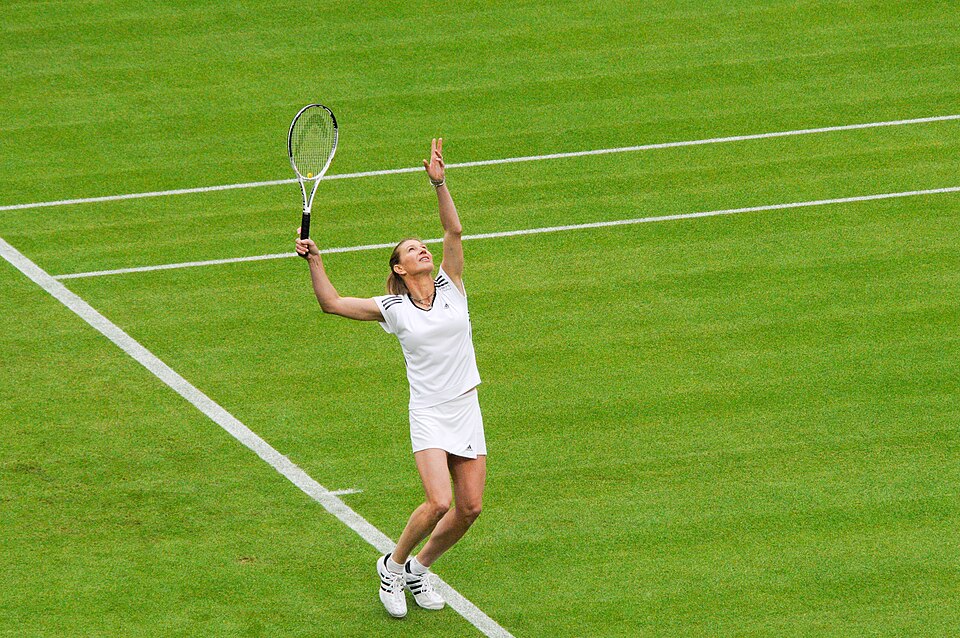
Grand Slams, ATP & WTA
Tennis is the plainest thing on the FairPlay board. Two players, no draw, one number each. What it is not is gentle: the scoring system takes a small advantage and keeps multiplying it, so a player winning 55% of points ends up winning around 91% of matches. That is why a semi-final which feels like a coin toss can sit at 1.90 and still be priced honestly.
On The Board Tonight
Five fixtures, a back and a lay number against each player, every clock already converted to IST for you.
Prices shown are illustrative
Rohit Sequeira v Anil KamatLive
Min 100 · Max 50,000
Min 100 · Max 50,000
Min 100 · Max 25,000
Min 100 · Max 1,00,000
Min 100 · Max 20,000
Small Margins, Big Numbers
Tennis never banks a lead. Each point feeds a game, each game feeds a set, and every one of those handovers stretches whatever gap was already sitting there.
| Points won | Service games | Sets | Best-of-3 | Best-of-5 |
|---|---|---|---|---|
| 50% | 50.0% | 50.0% | 50.0% | 50.0% |
| 52% | 55.0% | 64.0% | 70.5% | 74.9% |
| 53% | 57.5% | 70.5% | 79.0% | 84.3% |
| 55% | 62.3% | 81.5% | 91.0% | 95.3% |
| 60% | 73.6% | 96.3% | 99.6% | 99.9% |
Start at the 52% row and let it sink in. A player barely ahead over a hundred points is taking 70.5% of best-of-three matches. Nudge that to 55% and the number is 91.0%. Reach 60% of points, which almost nobody sustains against a peer, and best-of-five is 99.9% — a figure that stops meaning anything useful, which is itself the lesson. Nothing else explains tennis pricing as quickly: a genuinely tight matchup deserves a short number, and a 6-1 6-2 card is usually one player edging points rather than dismantling somebody. These come from a simplified even model, drawn to show the shape of the effect, and they are not a price for any real match.
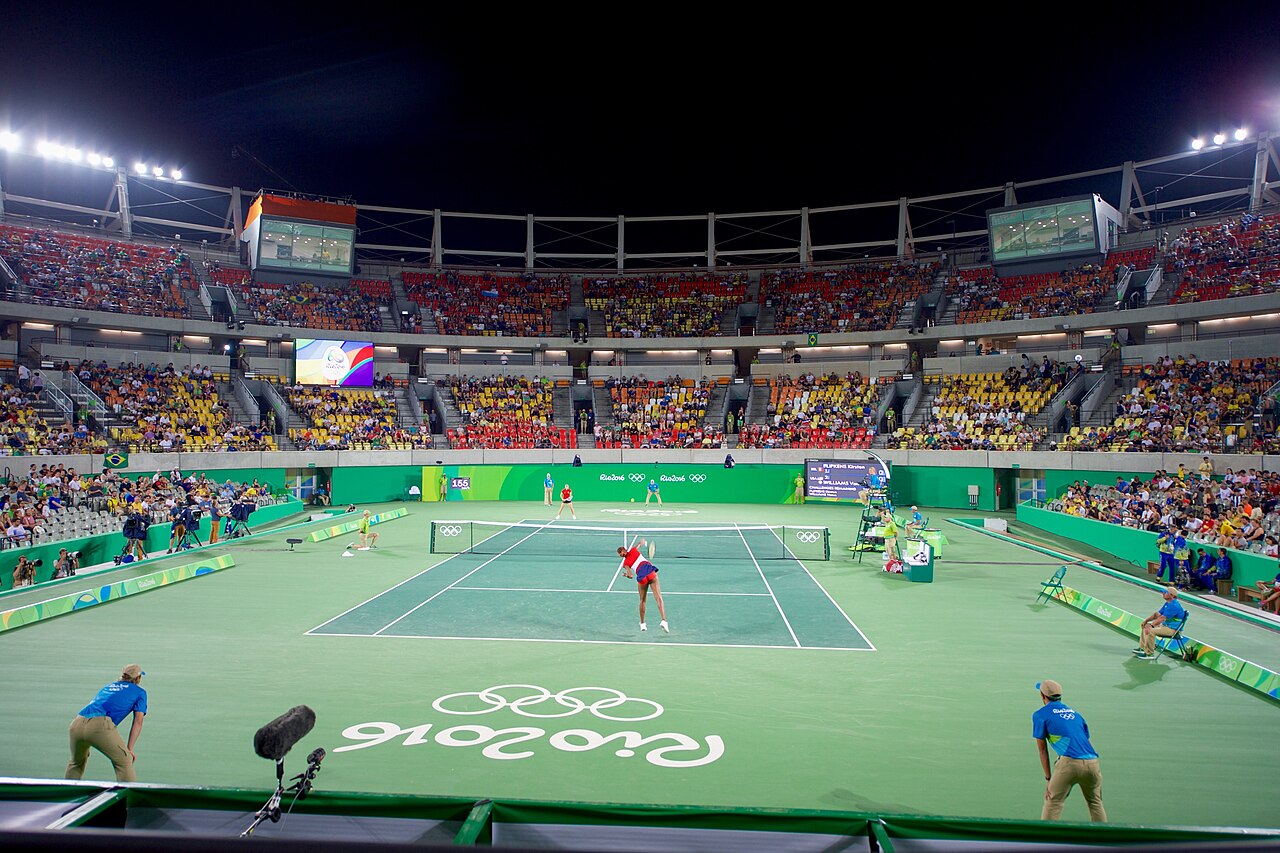
Markets
Forty-plus markets sit under a main-draw fixture, running from the bare two-way number out to game handicaps, set scores and point-by-point in-play.
There is no draw to price here, so the market is about as bare as a market gets: two names, two numbers, one of them ends up winning. Both sides redraw themselves after every single point once play is under way.
2-0 or 2-1 across three sets, stretching out to 3-2 in the men's slams. The numbers run longer than the outright, and the ones people actually study are the scorelines that need a decider.
A single line for the whole match, over or under. Two heavy servers on a quick court push that number up; two counter-punchers on clay drag it back down again.
The outsider starts a few games to the good. Useful on the nights when the favourite is quoted too short to be interesting and you still want a side of the match.
Numbers redraw at each changeover and after each point. A single break of serve shifts a tennis market harder than more or less any one event shifts any other sport on the board.
The doubles draws at the slams, and at the tour events sitting underneath them, are priced in full — including the ones Indian pairs have made their own down the years.
The Calendar In IST
One of them lands beautifully on an Indian morning and one of them will quietly eat your sleep for a fortnight. Better to know which before it starts.
Melbourne sits four and a half hours ahead, so the tennis arrives in a Goan morning while the January air is still cool and the humidity has not woken up. Day play from about 5:30 AM, the night session finishing here in the afternoon. Easily the kindest fortnight of the year for anyone who has to be somewhere by ten.
Paris opens mid-afternoon IST, which in Panaji is the heaviest, stillest stretch of a pre-monsoon day, and a main-court night match can run past midnight. Clay stretches contests out further than any other surface, which is exactly why the totals lines here sit above everything else on the calendar.
The gentlest of the European slams for this side of the world. Play starts mid-afternoon here, usually with the monsoon coming down hard on the balcony rail, and the 11:00 PM local curfew gives the day a hard stop rather than letting it wander into your night.
The difficult one. Day sessions get going around 9:30 PM IST and a night final can still be running when the fishing boats are already back on the Mandovi. Decide how you want to handle the fortnight before it begins, not at four in the morning halfway through it.
Getting Started
This is the whole sequence for anyone who has never had a betting exchange open in front of them before.
The flat is on the first floor of a building off the Campal road in Panaji, close enough to the Mandovi that you can hear the casino boats when the wind swings around. January, so the fans are off for the first time since the rains and the balcony door stays open all night. Sandeep from downstairs came up around nine with a packet of chakna and no particular plan, and by half past we had the ATP Masters semi-final open on the FairPlay board with my phone propped against the sugar tin.
The numbers told the story before either man walked on. 1.90 against one, 1.98 against the other. Two players the market could not separate, in a sport that offers no draw to hide behind. Sandeep looked at it the way most people look at it the first time and said the obvious thing: if it is that close, why bother. The answer took the rest of the night and most of the next morning, and it is the reason this page exists.
Say Sandeep decides he likes the 1.90. He taps the blue cell against that name, which is the back side, and a slip opens with a stake box in it. Put ₹500 in and the slip tells him the return: ₹950 if the man wins, ₹450 of it profit, and ₹500 gone if he does not. There is no third outcome to worry about. He confirms, the bet drops into his open bets, and the board carries on refreshing behind it.
The pink cell beside it, 1.94, is the lay. That is the other half of the same conversation — instead of backing the man to win, you are taking on somebody who wants to. Lay a player at 1.94 for ₹500 and you stand to collect that ₹500 if he loses, while owing ₹470 if he wins. The liability is the number to look at on the lay side, not the stake, and the slip shows it before anything is confirmed.
That row on the board carries its own limits, printed alongside it: minimum ₹100, maximum ₹50,000 for the semi-final. The floor across tennis markets generally is ₹20, and on the slam fixture listed for the next morning the ceiling runs to ₹1,00,000, because more money wants a slam than wants a Tuesday semi. Sandeep put on something closer to the minimum than the maximum, which was sensible of him.
Nothing happened for forty minutes. Hold, hold, hold, hold — that is tennis at this level, where holding serve is the default state of the world and breaking is the event. Then one of them got to 15-30 on the other's serve, won a rally that went about eighteen shots, and broke.
Sandeep watched the price against his man tighten on screen while the players were still walking to their chairs. The 1.90 he had taken did not exist on the board any more. One break in a set is often the whole set, and the market knows it: a break of serve moves a tennis price harder than a goal moves a football price, because football still has ninety minutes and a draw available and tennis has neither.
This is also why the interesting moments in tennis are so easy to anticipate. Deuce on a big server. 15-30 on anybody. The game immediately after a break, when the player who has just been broken is either about to fold or about to hit back. Those are the three or four minutes where the number is really decided, and they are where you either take a position or close one you are already holding. How to do that mid-match is set out on in-play betting.
Sandeep did not have one at nine o'clock and did by twenty past. You give a mobile number, confirm the code that arrives on it, and you have an ID. Money goes in over UPI the same way you pay the vegetable man at the Panjim market — the wallet updates in seconds and the board becomes clickable. Start at FairPlay register if you are doing it for the first time, or FairPlay login if you already had an ID and lost track of it somewhere around last year's monsoon.
One thing worth saying plainly, because people in Goa ask it constantly: there is no separate Goa build of the product. The same markets, the same wallet, the same UPI rails and the same login screen are what everybody gets — a friend of mine in Belagavi and a cousin in Vasco are looking at exactly the board described on FairPlay India, right down to the ₹20 floor. Nobody is being served a smaller tennis section for living off the Campal road.
If it is your first bet, put a genuinely small number in the stake box on a two-way market and watch it settle. One match winner bet on a fixture you were going to watch anyway will teach you more about how the board behaves than an hour of reading, this page included.
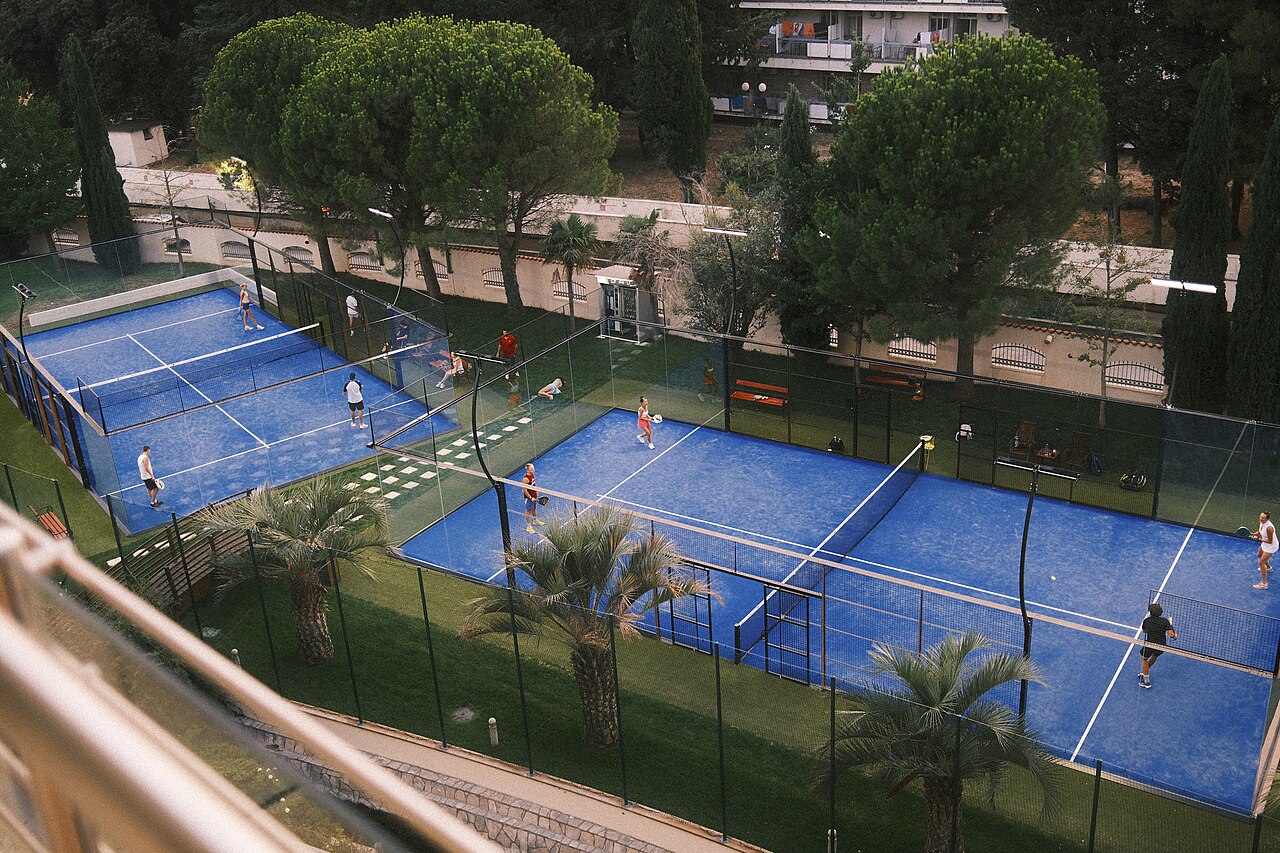
Around midnight the conversation went where it always goes with Indian tennis followers of a certain age: to the doubles. Sandeep can name half a doubles draw and about four singles players, and he is not unusual. This country's tennis history lives in the doubles column, and that knowledge is worth real money in a market carrying a fraction of the attention and a fraction of the stakes.
The catch is that doubles is not simply singles with more people on court. Most tour doubles plays no-ad scoring, so deuce becomes one sudden-death point instead of a stretch of back-and-forth, and the deciding set is replaced by a match tiebreak to ten. Both rules do the same thing: they shorten the match and hand the weaker pair more room. Look back at the table higher up this page and the reason is obvious — fewer points to convert means less time for an edge to compound. A doubles price that looks generous is usually just a correct price for a format built to keep things close.
Tennis is the sport where a contest can end without being finished, and this catches more people out than any other rule on the page. A player calls the trainer, sits for a while, shakes hands and walks off. There is no rescheduling the way an abandoned football match gets rescheduled. It stands as a retirement, and the markets settle under rules written specifically for that.
Broadly: a match-winner bet is voided and the stake comes back unless the match had already passed a defined point of completion, while anything the completed play had already decided settles as it stands. A set-betting market on a set that finished, or a total-games line already crossed, is normally paid out rather than returned. But those rules differ by market and by operator, so the settlement terms shown on the event itself are the ones that govern your bet. If you are staking in-play on somebody who has had strapping applied twice, read them first. Reading them afterwards is how people end up arguing with support at two in the morning.
A walkover is the clean version. Nobody hit a ball, so there was no contest to settle against — every market on the fixture voids and every rupee comes back to the wallet.
Look at the last row of the board above: a Challenger Tour final on Sunday, limits capped at ₹20,000, no prices showing yet. Small tournaments like that are exactly where the tipster groups aim, because hardly anyone is watching and almost nobody can check a claim afterwards. Sandeep got added to one of these within a week of opening his account, the way everybody does.
The pattern barely changes. Somebody messages saying they have inside word on a low-level match, produces screenshots of past winners that were obviously typed after the fact, and asks for a fee or a share of the stake. Sometimes the offer is worse: they want to place the bet for you, or to load your wallet for you at a discount if you send money to a private UPI ID. Anything that routes your money around the app instead of through it is the tell. Deposits go through the payment screen in your own account and nowhere else; there is no agent, no middleman and no discounted top-up.
The other version of the scam is a login page that looks right and is not. Get to your account from FairPlay login or from a bookmark you made yourself, never from a link somebody forwarded you at eleven at night with a bonus code attached. And if a stranger can genuinely predict a Challenger final, ask yourself the obvious question about why he is selling it to you for ₹500.
Grass and the quicker hard courts pay the server. That means more holds, more tiebreaks, higher totals lines, and matches settled by three or four points spread across two hours in which almost nothing visibly happened. Clay takes the sting off the ball and gives the returner time to get into rallies, which produces breaks, long exchanges and the most gruelling matches of the year. Roland-Garros is where five-setters turn into something closer to endurance sport.
The practical version of that, for anyone filling in a slip: form on the surface being played beats form in general, every time. Three wins on hard courts in February tells you very little about somebody in May. When the tour changes surface — clay in the spring, grass right after it — treat the opening week of the swing as a fresh season rather than a continuation of the old one, because that is how the players are experiencing it too.
Panaji has an unusually neat relationship with the tennis calendar, and once you notice it you cannot stop using it. The Australian Open runs in January, which here is the dry, cool, tourist-thick month when the mornings are pleasant and the ceiling fan stays off — and Melbourne being four and a half hours ahead means play starts around 5:30 AM IST. You watch the tennis with your first coffee, on the balcony, before the Campal road fills up with school traffic. That is why the 6:30 AM row on the board above is the best-value habit of the whole year.
Roland-Garros lands in May and June, when Goa is waiting for the rain and the afternoons are heavy and airless, and the tennis conveniently starts at 2:30 PM IST and runs to about 2:00 AM. Wimbledon in June-July arrives with the monsoon in full flow, which is a pleasing arrangement: rain on your balcony rail and rain covers going on in London, and an 11:00 PM local curfew that puts a hard stop on the night whether the match is finished or not.
Then the US Open, August into September, as the rains here start tailing off, with sessions beginning at 9:30 PM IST and finals capable of running to 8:00 AM. That is the fortnight to be careful about. A five-setter finishing at six in the morning is precisely the situation where staking decisions get worse without feeling any worse from the inside — you are tired, you have been up all night, and the last bet always feels justified. Set deposit and session limits before the tournament begins rather than during it; responsible gaming covers the tools, and live sports shows what is running at which hour IST so you can decide in advance which nights are worth losing.
Sandeep's man, for the record, lost the semi-final in three sets after that break. He put ₹500 on and got nothing back, and he has been on the balcony for the tennis most mornings since. He now understands why 1.90 and 1.98 was a fair price for a match that was never actually close.
FAQ
Pricing, retirements, walkovers, surfaces and what the slam clock does to a Goan sleep pattern.
Because tennis never lets a lead sit still. Points are converted into games, games into sets, sets into a match, and each of those handovers stretches whatever gap was already there. On the simplified even model in the table above, a player taking 52% of points is winning about 70.5% of best-of-three matches; push that to 55% and the figure is 91.0%. So a match that reads as close on paper can honestly carry a very short number, and a 6-1 6-2 scoreline usually means somebody edged the points rather than crushed them.
Structurally they are. A longer format hands the stronger player more opportunities to cash in the same small advantage, so best-of-five works against surprises before a ball is hit. On the same model, an edge worth 91.0% over three sets is worth 95.3% over five. That is why outsider prices at the men's slams tend to run longer than at an ordinary tour event, and why a first-round shock over five sets is a genuinely bigger result than the same scoreline over three.
That depends entirely on which market you were in, and tennis is the sport where the difference bites hardest. A match-winner bet is normally voided with the stake returned unless the contest had passed a defined point of completion. Anything already settled by finished play — a set-betting market on a set that is over, a total-games line that has been crossed — usually stands. The rules are not identical across markets or across operators, so the settlement terms printed on that event are the ones that apply to you. Read them before staking in-play, not after the trainer has been on twice.
No, it is much simpler. A walkover means a player pulled out before the first ball was struck, so nothing at all was contested. Every market on that fixture is voided and every stake comes back, because there is no play to settle anything against. A retirement is different: the match started, points were played, and some markets may already have been decided by the time the racket went back in the bag.
More than most people expect it to. Grass and quicker hard courts pay the server, which means more holds, more tiebreaks and higher totals lines. Clay takes the sting off the ball and hands the returner time, which produces breaks, long rallies and the longest matches of the season. The same two names can look like four different players across a year, so form on the surface being played tells you more than form in general. Treat the first week of a new swing as its own thing rather than a continuation of the last one.
It rewards anyone who bothers to learn the format. Most tour doubles runs no-ad scoring, where deuce collapses into a single sudden-death point, and swaps a deciding set for a match tiebreak to ten. Both changes shorten the contest and push variance up, so favourites convert less dependably than they would over a full third set. Plenty of followers in India know the doubles draw better than the singles one, given where this country's tennis history sits, and that familiarity counts for something in a market carrying far less money.
The Australian Open is the comfortable one, with play from roughly 5:30 AM IST because Melbourne is only four and a half hours ahead of us. Wimbledon and the French Open both open mid-afternoon here and carry on into the small hours. The US Open is the awkward one, starting around 9:30 PM IST, with night-session matches finishing after sunrise in India. Every start time on the board is already converted to IST, so there is nothing to work out yourself.
Markets open at ₹20, and each row on the board carries its own minimum and maximum on top of that — the slam fixtures above run to ₹1,00,000, a Challenger final to ₹20,000. Depth is best on the match winner at the slams and on main-court matches at tour events. A first-round tie on an outside court at a small tournament will be thinner, with wider numbers on both sides.
Explore FairPlay